During the end week Apple launched a few Type-C USB cable replacement program among those delivered with the new model of MacBook with Retina display 12-inch. In additional equipment included with some models distributed until June 2015 could be a "design problem" leading to various types of abnormal behavior. According to Apple the MacBook may not charge or do intermittently when connected to a source of electrical energy with the defective cable.

With the launch of the replacement program, the company promises a new USB Type-C to the MacBook user, and even to customers who have purchased separately as an optional accessory. To recognize one of the defective accessories you need to check the written word along the cable: defective products bear the words "Designed by Apple in California. Assembled in China", while in the cables that do not present problems of this nature the word is followed by a serial key.
The procedure to obtain the replacement is the same: we must first provide the number of the MacBook series to Apple to verify eligibility for the program. Once assured himself of the defect, the user can make an appointment at the Genius Bar of an Apple Store, contact an Apple Authorized Service Provider or contact your national technical support. The company will send a new redesigned cable users who have submitted a valid postal address.
Apple says that the new replacement program will run for over two years and will cover the cables until 8 June 2018. Unlike other exchange programs, the Cupertino company specifies that one related to Type-C USB cables MacBook will not extend the standard warranty coverage of the ultra-book.
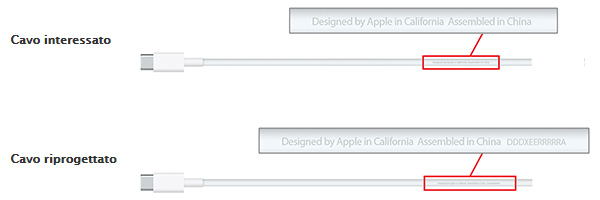
With the launch of the replacement program, the company promises a new USB Type-C to the MacBook user, and even to customers who have purchased separately as an optional accessory. To recognize one of the defective accessories you need to check the written word along the cable: defective products bear the words "Designed by Apple in California. Assembled in China", while in the cables that do not present problems of this nature the word is followed by a serial key.
The procedure to obtain the replacement is the same: we must first provide the number of the MacBook series to Apple to verify eligibility for the program. Once assured himself of the defect, the user can make an appointment at the Genius Bar of an Apple Store, contact an Apple Authorized Service Provider or contact your national technical support. The company will send a new redesigned cable users who have submitted a valid postal address.
Apple says that the new replacement program will run for over two years and will cover the cables until 8 June 2018. Unlike other exchange programs, the Cupertino company specifies that one related to Type-C USB cables MacBook will not extend the standard warranty coverage of the ultra-book.
Comments
Post a Comment