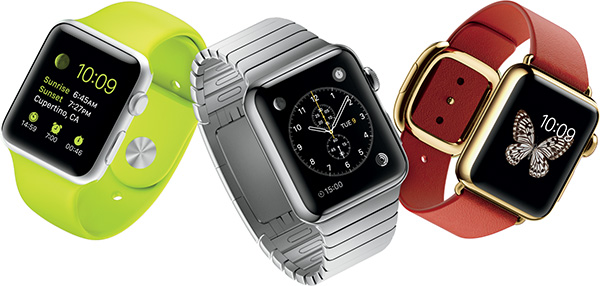
The latest Strategy Analytics data shows that Apple Watch has remained the most popular model of smartwatch in the fourth quarter of 2015. The smartwatch of Apple has captured 63% of the global market with sales estimated at 5.1 million units. It follows, at a considerable distance, Samsung, with 1.3 million smartwatch sold and 16% of the market share. In total, according to figures of SA on 10 products sold in the Christmas season 8 they are Apple and Samsung.
Another interesting fact that we can read in the statistics is related to that of the Swiss watch market sales, the same as Jonathan Ive considered (of course, not officially) in trouble because of the arrival of Apple Watch. And, indeed, during the Christmas season the new category of smartwatch has done better, with 8.1 million devices placed on the market compared to 7.9 million Swiss watches sold in the same period.
On the smartwatch market it is growing by 316% from 1.9 million units sold in the last three months of 2014 to 8.1 million in the same quarter in 2015, while that of Swiss watches has seen a slight decline (-4, 8%). Comments on Strategy Analytics statistics released to the public:
The Swiss watch industry has been too slow to react to the development of the smartwatch. He preferred to bury their heads in the sand hoping that the fashion of the smartwatch pass unnoticed and go away. Brands such as Tag Heuer had a negligible market share in the fourth quarter of 2015, and are terribly behind Apple, Samsung and other leaders in the smartphone category that is growing. "
Unfortunately we have no official information from Apple so you can compare the numbers from Strategy Analytics. The company that fits inside the clock sales of "other products" along with iPod, Apple TV, Beats and other accessories. The Apple Watch sales are growing according to the analyst firm: 4 million in the second quarter, 4.5 million and 5.1 million in the third quarter. Apple sold a total, according to unofficial data, 13.6 million units in the year of the debut.
Another interesting fact that we can read in the statistics is related to that of the Swiss watch market sales, the same as Jonathan Ive considered (of course, not officially) in trouble because of the arrival of Apple Watch. And, indeed, during the Christmas season the new category of smartwatch has done better, with 8.1 million devices placed on the market compared to 7.9 million Swiss watches sold in the same period.
On the smartwatch market it is growing by 316% from 1.9 million units sold in the last three months of 2014 to 8.1 million in the same quarter in 2015, while that of Swiss watches has seen a slight decline (-4, 8%). Comments on Strategy Analytics statistics released to the public:
The Swiss watch industry has been too slow to react to the development of the smartwatch. He preferred to bury their heads in the sand hoping that the fashion of the smartwatch pass unnoticed and go away. Brands such as Tag Heuer had a negligible market share in the fourth quarter of 2015, and are terribly behind Apple, Samsung and other leaders in the smartphone category that is growing. "
Unfortunately we have no official information from Apple so you can compare the numbers from Strategy Analytics. The company that fits inside the clock sales of "other products" along with iPod, Apple TV, Beats and other accessories. The Apple Watch sales are growing according to the analyst firm: 4 million in the second quarter, 4.5 million and 5.1 million in the third quarter. Apple sold a total, according to unofficial data, 13.6 million units in the year of the debut.
Comments
Post a Comment