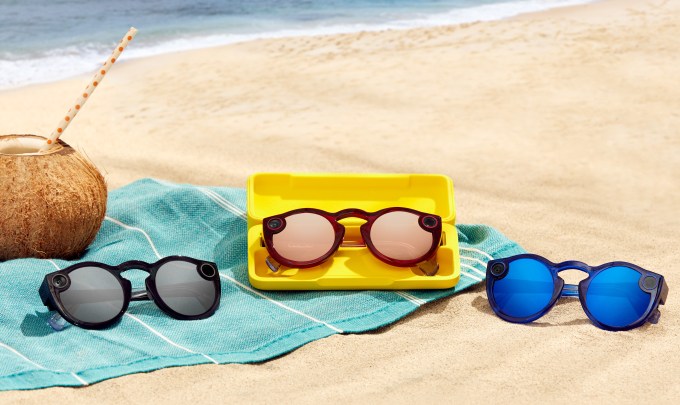
Photos, not just video. No yellow ring alerting people to the camera. Underwater-capable. Classier colors with lighter lenses. Prescription options. Faster syncing. And a much smaller charging case. Snapchat fixed the biggest pain points of its Spectacles camera sunglasses with V2, which launch today for $150. The company only sold 220,000 pairs of V1, with their limited functionality, tricky exports, and goofy style. But V2 is stylish, convenient, and useful enough to keep handy. They’re not revolutionary. They’re a wearable camera for everybody.
You can check out our snazzy hands-on demo video below.
The new Spectacles go one sale today in the US, Canada, UK, and France, then in 13 more European countries on May 3rd. They’re only available on Snap’s app and site — no Amazon, pop-up stores or vending SnapBots. And V1 owners will get a firmware update that lets them take photos.
After two days of use, I think Spectacles v2 cross the threshold from clumsy novelty to creative tool accessible to the mainstream. And amidst user growth struggles, that’s what Snap needs right now.
V1 Was To Get People Comfortable
What it doesn’t need is a privacy scandal, and that risk is the tradeoff Snap is making with its more discrete Spectacles design. They still display a little circle of white lights while recording, but without the permanent yellow ring on the corner you otherwise might not notice there’s a camera lens there. That could make people a little nervous and creeped out.
But the company’s VP of hardware Mark Randall tells me he thinks the true purpose of V1 was to get people comfortable wearing and being recorded by a face computer. It certainly wasn’t a consumer success, with less than half of owners using them after the first month. He said he feels pretty good about shipping 220,000 pairs. Yet Snapchat was roundly mocked for taking a $40 million write-off after making hundreds of thousands too many. Randall attributes that to having fragmented sales channels, which Snap is fixing by only selling V2 itself.
[gallery columns="4" type="slideshow" ids="1628988,1628989,1628987,1628990"]Snap did learn that users wanted to take photos, get them in less flashy coral colors, bring Spectacles to the beach, pair them quicker with better resolution exports, and hear less wind noise when moving. And most importantly, they wanted something they didn’t feel weird wearing. So his team essentially scrapped the yellow warning ring, style, architecture, chipset, and electronics to build a better V2 from the ground up. The result rises high above its predecessor.
What’s Special About Spectacles V2
As soon as you slide them out of their tennis ball tube package, you’ll notice a higher build quality in Spectacles V2. The yellow case is about 1/3 smaller, so you could squeeze it in some pants pockets or easily throw it in a jacket or purse. The old version you basically required a backpack. The charging port has also been moved to the side so it doesn’t fall out so easily. Even with the better hardware, Spectacles are still supposed to get a week of normal use on a charge, plus carry four extra charges in the case.
The Spectacles themselves feel sleeker and less like chunky plastic. The box holding the hardware is much smaller, making them lighter overall. It’s easy to long-press for a photo or tap for 10-second video, with extra taps extending the clip up to 30 seconds.

Syncing to your phone always happens in HD now, and goes four times quicker than the old process that required you to sync standard definition (low quality) versions of videos first, then pick your favorites, then download them in HD.
Snapchat may have finally found a way to make Spectacles carryable and wearable enough that people use them as their default sunglasses. That could lead to way more content being produced from Spectacles, which in turn could make Snapchat more interesting at a time when it’s desperate to differentiate from Snapchat.


from TechCrunch https://ift.tt/2Hsf7Ri
via IFTTT
Comments
Post a Comment