
Halide’s iOS camera app now lets you strip the location data from your photos

Halide, the premium iOS camera app from ex-Apple designer Sebastiaan de With and Twitter engineer Ben Sandofsky is today launching one of its biggest upgrades since its arrival last year. The updated app includes a Self-Timer, redesigned photo reviewer, accessibility improvements, and more. But perhaps its best feature is the ability to take better control over your photo privacy – by pulling the location information out of your photos’ metadata before you share.

What has made Halide stand out from others was its combination of an attractive, gesture-based interface designed to simplify the use of pro camera features. This made the app a great option for casual photographers and pros alike.

The existing app includes features like a manual focus dial, an intelligent automatic mode for getting the sharpest shot, RAW and JPG capture support, a grid and level tool, and live histogram.

Now the app is gaining a handful of other useful additions, like the new Apple Watch companion.
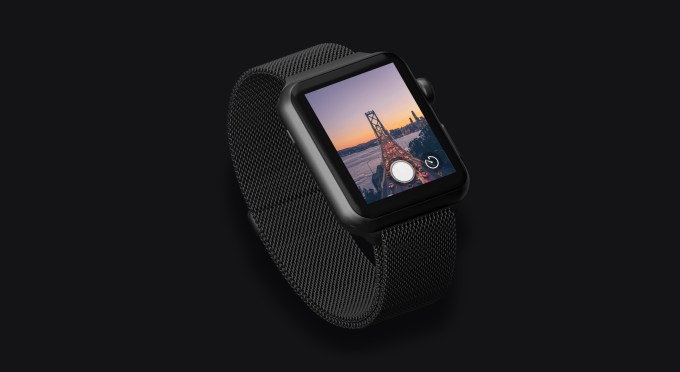
With the Apple Watch app installed, photographers can do things like remotely frame their shots, trigger Halide’s shutter and set timers. That way you can position your shot and then snap it, right from your wrist.

However, users without an Apple Watch can use the new Self Timer function instead. With this, you can set a timer of 3, 10 or 30 seconds. When activated, the shutter button stays depressed and you’ll see a countdown in the icon around the button itself.

The updated app also introduces a new photo reviewer. Users can now scroll through a grid of their shots, then flip back to the camera to snap more.

Accessibility improvements rolling out today include the addition of Dynamic and Bold Type and VoiceOver support. Halide’s creators note, too, that the 30-second timer was built with accessibility in mind – allowing users with more limited mobility a better way to take photos.

However, one of the app’s bigger changes is around photo privacy.

Many people don’t know (or forget to think about) that our personal photos contain a lot of private data. Hidden in the photo file’s metadata is information about the camera, lens and flash settings, date and time, and the geolocation of the photos. That’s information that you may not want to share – especially if you’re planning to post the photo publicly to the web or on social media.

Halide now makes it simple to remove location data from the photo with the flip of a new toggle switch. And it can aid you with limiting the location sharing with Facebook, Instagram and WhatsApp, too.

The company isn’t talking about download numbers, but says its app is now being used by over 100,000 people on a monthly basis, according to Apple’s opt-in analytics. (Halide doesn’t use third-party tracking.) That’s fairly decent number for a paid application serving the more niche pro consumer crowd.

“Considering we don’t pursue growth tactics like emails or push notifications, we’re incredibly proud of this,” says Sandofsky of the usage. “We think we’ve solved a genuine need for many people,” he adds.

Halide is a paid download ($5.99) on the App Store.


from TechCrunch https://ift.tt/2r8meo6
via IFTTT

Comments

Popular posts from this blog

The Silent Revolution of On-Device AI: Why the Cloud Is No Longer King

Introduction For years, artificial intelligence has meant one thing: the cloud. Whether you’re asking ChatGPT a question, editing a photo with AI tools, or getting recommendations on Netflix — those decisions happen on distant servers, not your device. But that’s changing. Thanks to major advances in silicon, model compression, and memory architecture, AI is quietly migrating from giant data centres to the palm of your hand. Your phone, your laptop, your smartwatch — all are becoming AI engines in their own right. It’s a shift that redefines not just how AI works, but who controls it, how private it is, and what it can do for you. This article explores the rise of on-device AI — how it works, why it matters, and why the cloud’s days as the centre of the AI universe might be numbered. What Is On-Device AI? On-device AI refers to machine learning models that run locally on your smartphone, tablet, laptop, or edge device — without needing constant access to the cloud. In practi...

Apple’s AI Push: Everything We Know About Apple Intelligence So Far

Apple’s WWDC 2025 confirmed what many suspected: Apple is finally making a serious leap into artificial intelligence. Dubbed “Apple Intelligence,” the suite of AI-powered tools, enhancements, and integrations marks the company’s biggest software evolution in a decade. But unlike competitors racing to plug AI into everything, Apple is taking a slower, more deliberate approach — one rooted in privacy, on-device processing, and ecosystem synergy. If you’re wondering what Apple Intelligence actually is, how it works, and what it means for your iPhone, iPad, or Mac, you’re in the right place. This article breaks it all down.   What Is Apple Intelligence? Let’s get the terminology clear first. Apple Intelligence isn’t a product — it’s a platform. It’s not just a chatbot. It’s a system-wide integration of generative AI, machine learning, and personal context awareness, embedded across Apple’s OS platforms. Think of it as a foundational AI layer stitched into iOS 18, iPadOS 18, and m...

Billionaire clothing dynasty heiress launches Everybody & Everyone to make fashion sustainable

Veronica Chou’s family has made its fortune at the forefront of the fast fashion business through investments in companies like Michael Kors and Tommy Hilfiger . But now, the heiress to an estimated $2.1 billion fortune is launching her own company, Everybody & Everyone , to prove that the fashion industry can be both environmentally sustainable and profitable. There’s no argument about the negative impacts of the fashion industry on the environment. The textiles industry primarily uses non-renewable resources — on the order of 98 million tons per year. That includes the oil to make synthetic fibers, fertilizers to grow cotton, and toxic chemicals to dye, treat, and produce the textiles used to make clothes. The greenhouse gas footprint from textiles production was roughly 1.2 billion tons of CO2 equivalent in 2015 — more than all international flights and maritime shipments combined (and a lot of those maritime shipments and international flights were hauling clothes). The lit...