Google is introducing new tools for newsrooms looking to understand their online audiences and how those audiences feed into their overall business.
These efforts fall under the umbrella of the broader Google News Initiative, introduced in 2018 as a way for the search giant to fund quality journalism and find other ways to support the industry. Since then, Google has introduced two journalism-focused products that sit on top of Google Analytics — News Consumer Insights, which is designed to help publishers grow their audiences and become more profitable, as well as Realtime Content Insights, which is supposed to help newsrooms see what’s trending at any given moment.
“We heard over and over again that our news partners were drowning in this data,” said Amy Adams Harding, director of analytics and revenue optimization for news and publishing at Google. “They had difficulty teasing out actionable intelligence in the tsunami of numbers.”
She added that it was “important” to her team that these products be free to use and “accessible to anyone using Google Analytics.”
Today, Google is introducing version 2.0 of both News Consumer Insights and Realtime Content Insights, while also adding a new feature called the News Tagging Guide.
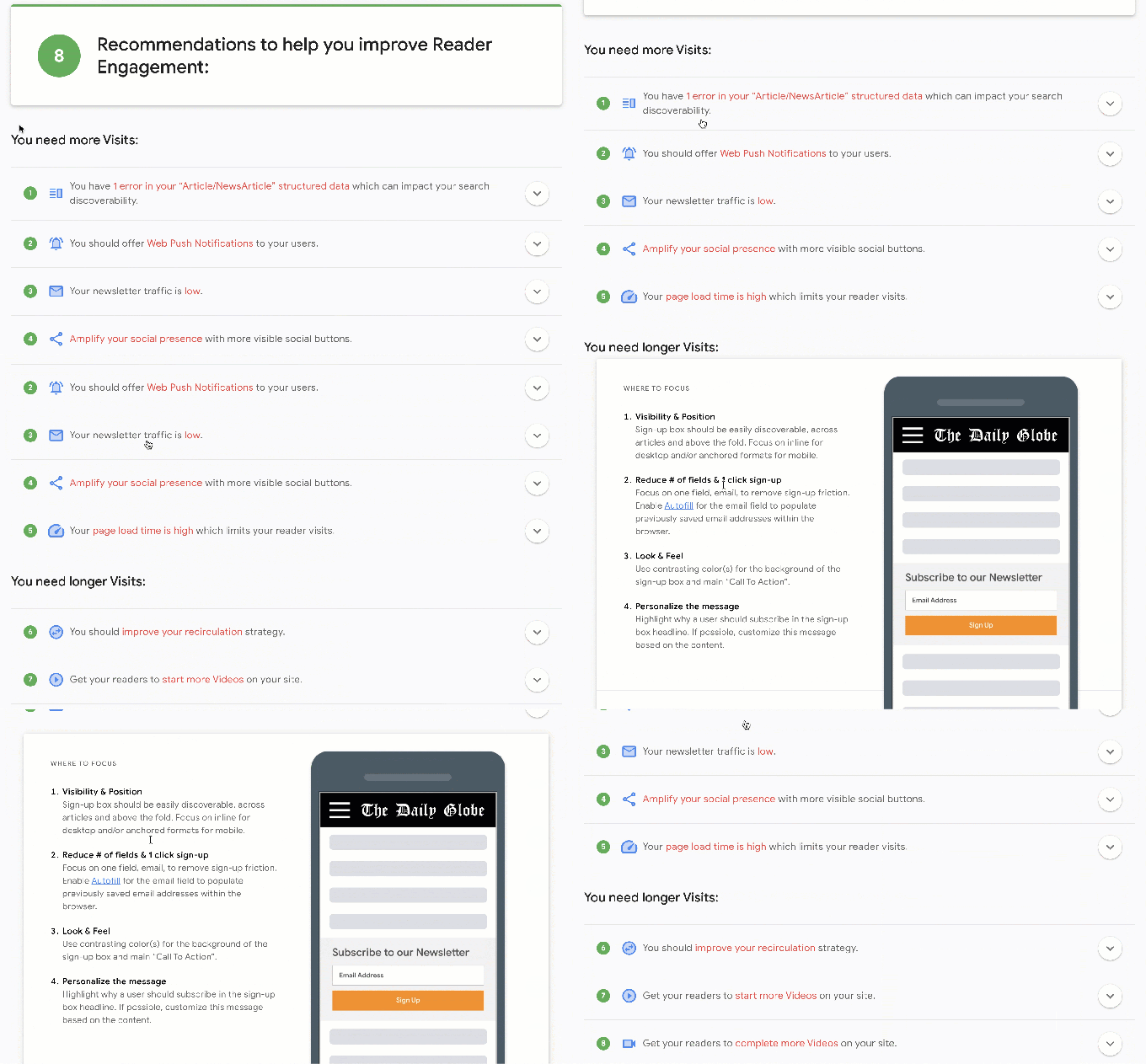
Image Credits: Google
NTG is supposed to make it easier for publishers to collect the data they need. That falls into three broad categories — video analytics, user engagement and reader revenue. Publishers will be able to select the category and the specific types of data they want to track, and then Google will give them JavaScript that they can copy and paste onto their website in order to start feeding that data into Google Analytics.
Meanwhile, the News Consumer Insights product now includes personalized recommendations for the publisher. For example, it might point out that a publisher’s newsletter signups are relatively low, and then it could suggest different ways to improve those signups. Harding noted that NCI didn’t lack recommendations before, but to find them, publishers had to continually refer back to the generalized playbook, rather than having the most relevant recommendations highlighted for them while they’re going over their data.
And Realtime Content Insights have been expanded to include similar data about video content, as well as historic performance data, so publishers can see which stories performed best in a given period of time. And it’s not simply focused on pageviews — RCI also tracks things like social sharing and engagement, and it identifies which stories are doing better with casual readers versus loyal readers (who visit more than once a month) versus brand loyalists (who visit at least 15 times a month).
“We’re not saying one is better than the other,” said Anntao Diaz, Google’s head of News Consumer Insights, Realtime Content Insights and Google Surveys for Publishers. Instead, he suggested that different articles can attract different readers to serve different purposes, whether that’s growing the overall audience or building a relationship with a loyal audience that might pay for subscriptions.
Google has already been testing these features with select publishers, including Time and local newspaper publisher Lee Enterprises.
“As Lee Enterprises’ audience reach continues to grow in our newspapers’ communities, our partnership with Google News Initiative provides excellent insight and industry benchmarks to measure our success,” said Kyle Rickhoff, director of analytics at Lee Enterprises, in a statement. “The new version News Consumer Insights powered by News Tagging Guide improves our understanding of readers’ engagement and helps us prioritize business opportunities for video, engagement conversions and on-site subscriptions with better data.”


from TechCrunch https://ift.tt/2Va1OtG
via IFTTT
Comments
Post a Comment