Much of our computer time is spent in a web browser, where we check emails, create documents, transfer files, carry out online banking, shop or stream entertainment. This leaves us vulnerable to security threats like phishing, identity theft and session hijacking, but many cybersecurity tools were created when the main threats were file viruses, worms and network attacks, said Vivek Ramachandran, the cybersecurity entrepreneur and researcher who discovered the Cafe Latte attack.
To combat browser-based vulnerabilities, Ramachandran founded SquareX. The Singapore-based cybersecurity startup announced today it has raised $6 million in seed funding from Sequoia Capital Southeast Asia, which it will use on R&D engineering and its go-to-market plans.
SquareX wants to serve as an alternative to current cybersecurity products by being tailor-made for browser-based cloud SaaS tools. It integrates with browsers as an extension and lets users open links and files in disposable browsers that serve as temporary container sandboxes. The headless browsers run in SquareX’s data centers so threats don’t reach users’ computers and they don’t need to worry about their personal information being exposed.
Before launching SquareX, Ramachandran was the founder of Pentester Academy, a cloud-based cybersecurity training startup that lets users and enterprises study how hackers break into their company. Pentester Academy was acquired by INE in 2021.
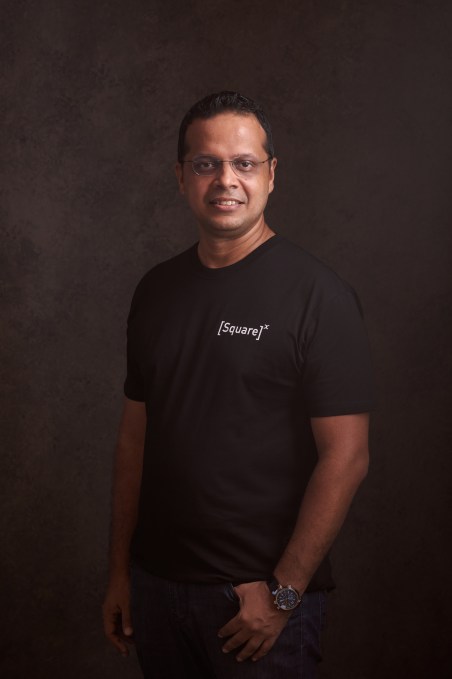
SquareX founder Vivek Ramachandran
Ramachandran told TechCrunch that while running Pentester Academy, his customers complained about how often their security products were disabled by users because they got in the way of their productivity. For example, someone in the process of receiving of an important Word document from a contact would have that file flagged as malware and would end up disabling security software in order to view it. As a result, Ramachandran realized that many security products are actually counterproductive because they make people less likely to use them.
As a result, he created SquareX, which does not block access to files or resources, even when they have been categorized as potentially malicious. Instead, it uses its disposable browsers. Ramachandran said SquareX is intended as a alternative to VPN, anti-virus, anti-malware and other endpoint security solutions.
SquareX’s disposable browsers enable anonymous browsing from any location. Users can “dispose” of it at anytime, which means no data is retained and the browser session is destroyed and removed from SquareX’s servers immediately. Ramachandran said it is safer and more private than incognito mode because websites the user visits or files they download don’t get stored in their computer.
“By creating disposable environments, SquareX ensures that a user’s identity and data is decoupled when accessing the internet,” he added. “This ensures that even the most sophisticated website trackers would fail to track and log the users activities and tie it to their identity.”
SquareX’s go-to-market strategy will focus on the United States, the United Kingdom and Asia first.
In a statement about the funding, Anandamoy Roychowdhary, Surge partner at Sequoia Southeast Asia, said, “The online world is about to get a whole lot worse as the AI revolution gets channeled towards building malicious code. Every cybersecurity solution out there is only probabilistically successful in protecting internet users, which is not of much comfort if they get hacked and lose money. SquareX is the first solution we’ve seen that takes a 100% protection approach–where irrespective of how new and sophisticated the attack is, it has no chance to infect users. This is the future we think all internet users deserve.”
Backed by Sequoia Southeast Asia, SquareX protects web users with disposable browsers by Catherine Shu originally published on TechCrunch
source https://techcrunch.com/2023/05/09/squarex/
Comments
Post a Comment