
Workstream’s text-based recruitment tool gets a $48M bet from BOND and beyond

It isn’t only tech giants that are struggling to fill open roles with talented individuals, it’s your local Jamba Juice, too.

Since 2017, San Francisco-based Workstream has been working on an answer to recruitment for the hourly worker. The subset of employees are in high demand right now by employers managing high turnover, as the labor market evolves amid the pandemic. These tailwinds in mind, Workstream announced today that it has landed a new round of financing to scale its recruitment efforts.

Workstream has raised $48 million in a Series B round co-led by Mary Meeker’s BOND and Coatue, with notable investors including Zoom CEO Eric Yuan and DoorDash CEO Tony Xu. Jay Simons, a GP at BOND and former president of Atlassian, joined Workstream’s board of directors. The raise comes a little over one year since Workstream raised $10 million in a Series A led by Founders Fund.

Per CEO and co-founder Desmond Lim, Workstream landed 12 term sheets in 9 days. He chalked up the interest to investors appreciating his startup’s differentiation among the flurries of other recruiting tools out there.

Even in the crowded world of recruitment software, Workstream has been able to carve out some attention for itself by focusing on text-based recruiting. Front-line and deskless workers are often the most disconnected members of the global job force due to a lack of access to company-issued e-mail addresses. Thus, by Workstream communicating with candidates over text, it is able to give workers on the go some real-time updates. This differentiation of mobile-based recruitment has helped bring down the time to hire for employers too, by bringing candidates in by going to where they already are.
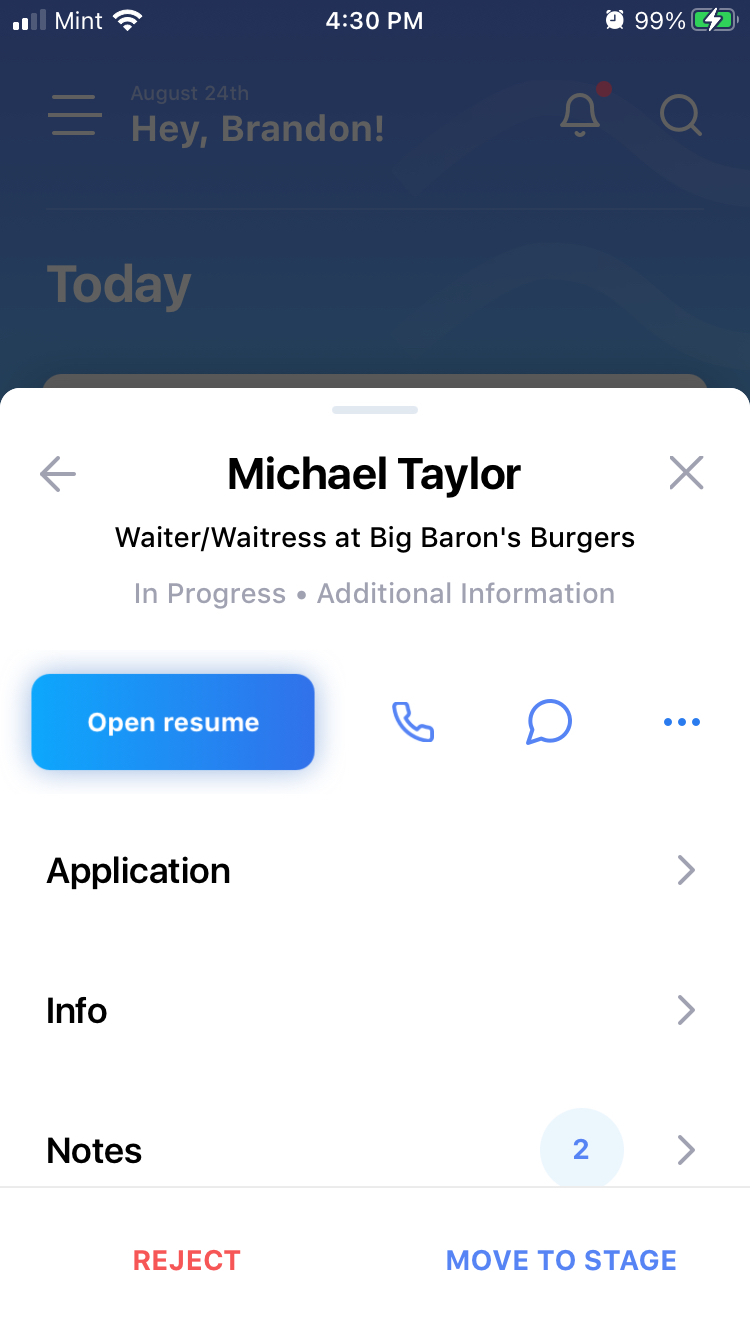
Lim, who grew up in Singapore with parents who both spent their days as hourly workers, sees this strategy working. In July, his company filled more than 18,000 jobs. Down the road, Workstream wants to serve hourly workers in healthcare and retail.

“There’s a football field [of software] for hiring software engineers,” Lim said. “But if you think about hiring for this space, there’s very few of us – and I think that has really helped us to go far from a team point of view, client sales, and even trying to raise funding.

While Workstream didn’t disclose specifics on revenue, it said that it has experienced “10X” ARR in the past year. One signal that it’s doing ok? The company has 1,500 customers across 10,000 different stores, which include the likes of McDonalds, Subway, and of course, Jamba Juice. Lim claims that Workstream has 20% market share in the top 20 brands.
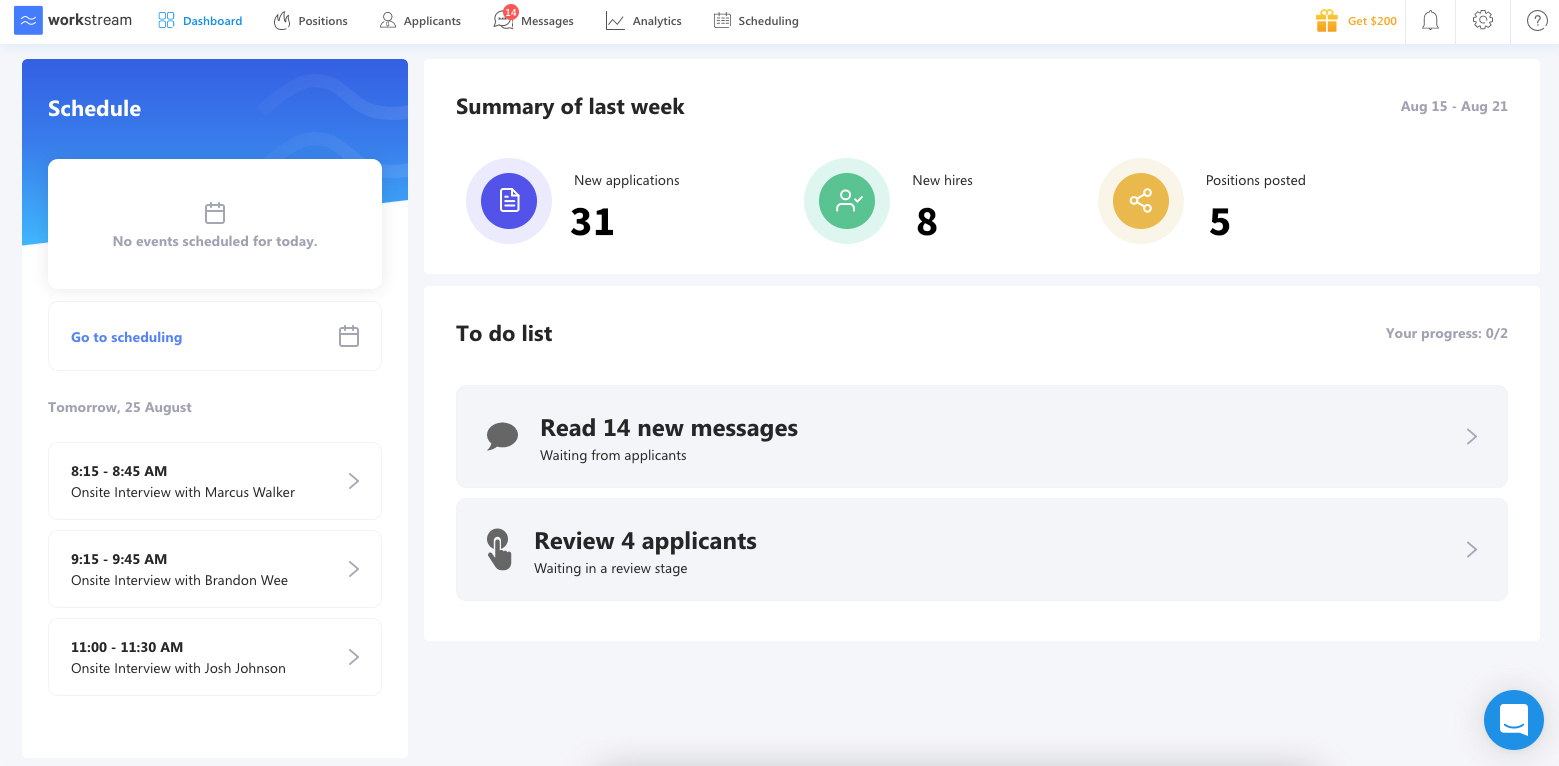
Workstream views itself as an end-to-end recruitment tool for the hourly worker, but its distribution is still tied to the some 25,000 job boards that it partners with to post listings. Lim said that his company is more focused on the “recruitment and engagement” bit of hiring, “helping to push people through the funnel very fast” versus trying to get them in the funnel in the first place.


from TechCrunch https://ift.tt/3jiVXyT
via IFTTT

Comments

Popular posts from this blog

The Silent Revolution of On-Device AI: Why the Cloud Is No Longer King

Introduction For years, artificial intelligence has meant one thing: the cloud. Whether you’re asking ChatGPT a question, editing a photo with AI tools, or getting recommendations on Netflix — those decisions happen on distant servers, not your device. But that’s changing. Thanks to major advances in silicon, model compression, and memory architecture, AI is quietly migrating from giant data centres to the palm of your hand. Your phone, your laptop, your smartwatch — all are becoming AI engines in their own right. It’s a shift that redefines not just how AI works, but who controls it, how private it is, and what it can do for you. This article explores the rise of on-device AI — how it works, why it matters, and why the cloud’s days as the centre of the AI universe might be numbered. What Is On-Device AI? On-device AI refers to machine learning models that run locally on your smartphone, tablet, laptop, or edge device — without needing constant access to the cloud. In practi...

Apple’s AI Push: Everything We Know About Apple Intelligence So Far

Apple’s WWDC 2025 confirmed what many suspected: Apple is finally making a serious leap into artificial intelligence. Dubbed “Apple Intelligence,” the suite of AI-powered tools, enhancements, and integrations marks the company’s biggest software evolution in a decade. But unlike competitors racing to plug AI into everything, Apple is taking a slower, more deliberate approach — one rooted in privacy, on-device processing, and ecosystem synergy. If you’re wondering what Apple Intelligence actually is, how it works, and what it means for your iPhone, iPad, or Mac, you’re in the right place. This article breaks it all down.   What Is Apple Intelligence? Let’s get the terminology clear first. Apple Intelligence isn’t a product — it’s a platform. It’s not just a chatbot. It’s a system-wide integration of generative AI, machine learning, and personal context awareness, embedded across Apple’s OS platforms. Think of it as a foundational AI layer stitched into iOS 18, iPadOS 18, and m...

Max Q: Anomalous

Hello and welcome back to Max Q! Last week wasn’t the most successful for spaceflight missions. We’ll get into that a bit more below. In this issue: First up, a botched launch from Virgin Orbit… …followed by one from ABL Space Systems News from Rocket Lab, World View and more Virgin Orbit’s botched launch highlights shaky financial future After Virgin Orbit’s launch failure last Monday, during which the mission experienced an  “anomaly” that prevented the rocket from reaching orbit, I went back over the company’s financials — and things aren’t looking good. For Virgin Orbit, this year has likely been completely turned on its head. The company was aiming for three launches this year, but everything will remain grounded until the cause of the anomaly has been identified and resolved. It’s unclear how long that will take, but likely at least three months. Add this delay to Virgin’s dwindling cash reserves and you have a foundation that’s suddenly much shakier than before. ...