
Audi’s e-tron GT concept is an all-electric sedan with some Porsche DNA

Audi is making room in its electric future for more than SUVs or crossovers.

After a string of teasers, the German automaker finally unveiled the Audi e-tron GT concept, a four-door all-electric coupe that has some Porsche DNA sprinkled in and that looks a lot like the A7. Audi introduced the concept Wednesday during the press days of the LA Auto Show.

The GT concept follows the September reveal of automaker’s first all-electric vehicle, the Audi e-tron SUV that is expected to go into volume production next year.

The e-tron GT is a concept for now. But not for long.

The e-tron GT concept will be developed volume-production models by the end of 2020. Initial deliveries will be made to customers in early 2021. Audi said its performance subsidiary Audi Sport is responsible for transforming the car into a volume-production model.
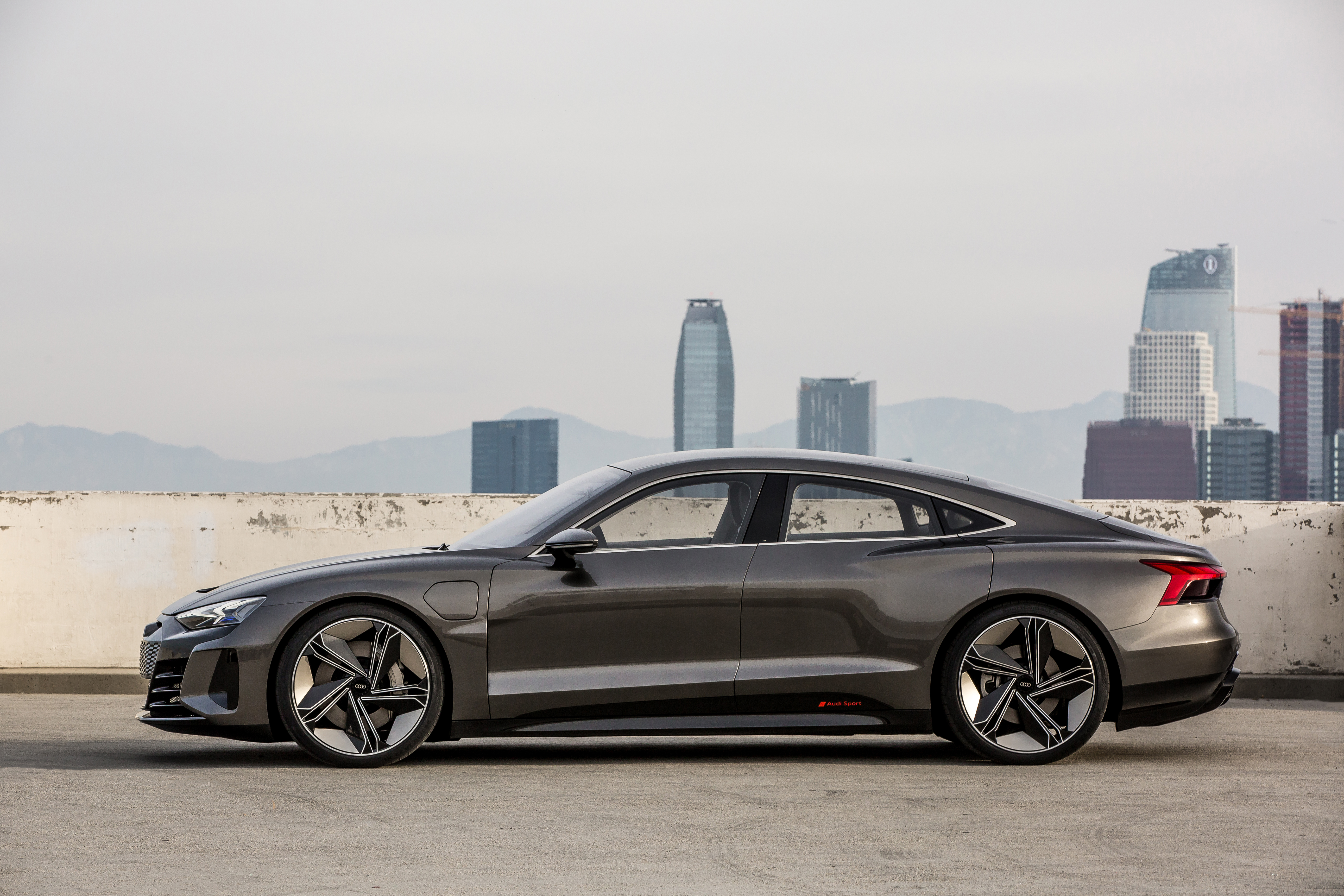
Audi-e-tron-GT-concept-side

First, the notable specs.

The Audi e-tron GT, which has a flat, wide underlying architecture and a long wheelbase, has separate electric motors fitted to the front and rear axles that produce an equivalent of 590 horsepower. The e-tron GT will accelerate from 0 to about 60 miles per hour in around 3.5 seconds and reach a top speed just shy of 150 mph, according to Audi.

The interior is vegan as well — perhaps a nod to Tesla — with synthetic leather and fabric from recycled fibers used on the seat cushions, armrests and center console. Audi doesn’t indicate whether a production version will off a vegan interior.

The vehicle has some Porsche touches as well. The Audi GT e-tron will be built on the Porsche Taycan platform. The Taycan, formerly known as Mission E, is an-electric sports car that Porsche plans to put into series production in 2019.

While Porsche worked with Audi on the e-tron GT, it should not be confused with another joint electric platform project between the two companies. Audi and Porsche have also partnered to develop its “Premium Platform Electric” (PPE), which will be the foundation for multiple Audi model families with all-electric drive.
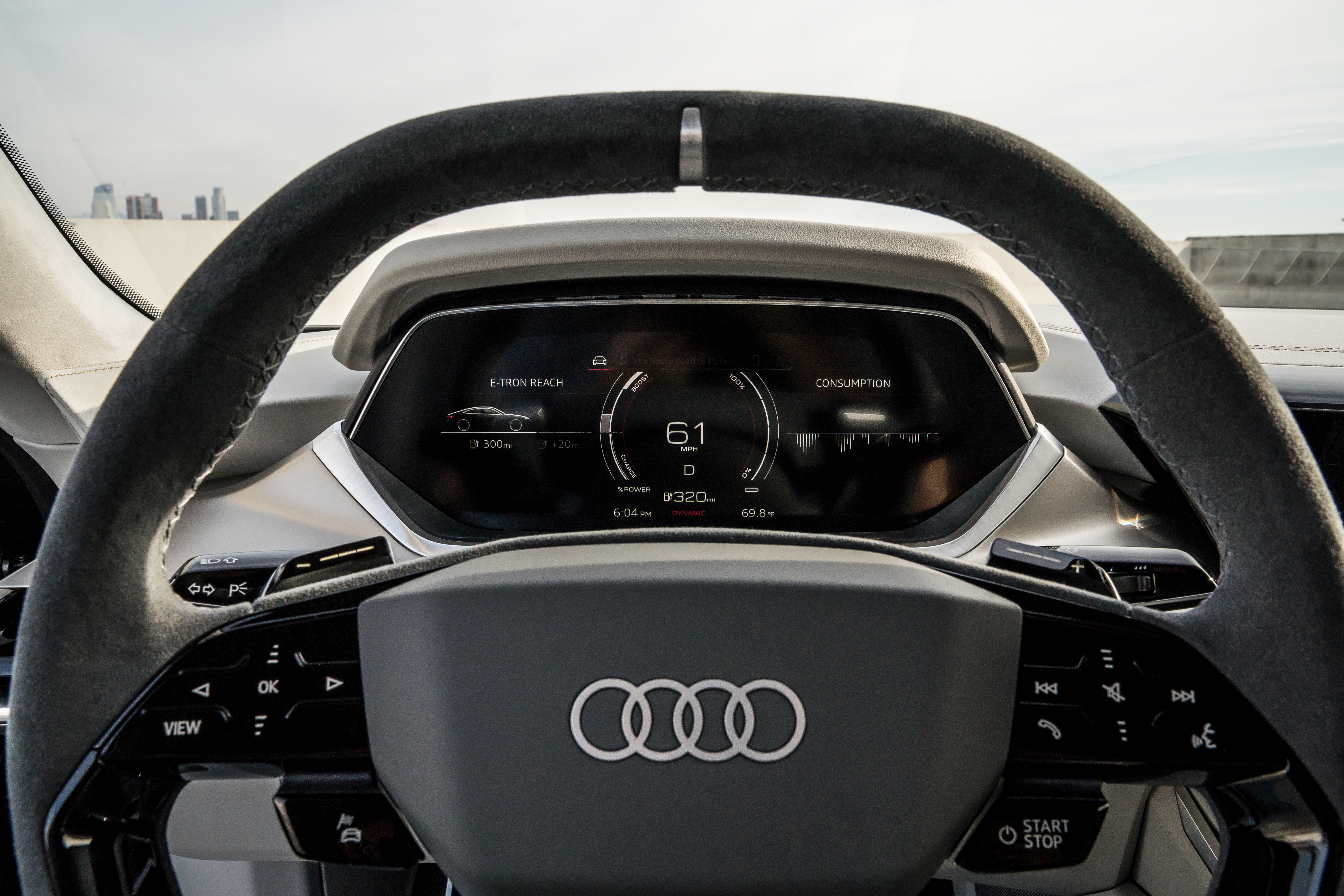
Audi-e-tron-GT-concept-5115

The electric GT will have a range of about 248.5 miles, although that could change by the time the vehicle goes into volume production. The Audi e-tron GT also shares the same 800-volt system as the Porsche Taycan, a feature that will shorten the time it takes to charge the battery. It will take about 20 minutes to recharge the battery to 80 percent of its capacity, according to Audi. (It’s worth noting that the Audi e-tron SUV doesn’t have this capability).

The battery in the e-tron GT concept can be charged using a cable or wirelessly by positioning the vehicle over a charging pad that has an integral coil installed on the floor. It’s unclear with the induction charging feature will make it into the production version of the e-tron GT.

The e-tron GT is just the beginning of what promises to be a string of electric vehicle reveals by Audi. The company has said that it will sell 12 all-electric vehicles by 2025.


from TechCrunch https://ift.tt/2P8Z89J
via IFTTT

Comments

Popular posts from this blog

The Silent Revolution of On-Device AI: Why the Cloud Is No Longer King

Introduction For years, artificial intelligence has meant one thing: the cloud. Whether you’re asking ChatGPT a question, editing a photo with AI tools, or getting recommendations on Netflix — those decisions happen on distant servers, not your device. But that’s changing. Thanks to major advances in silicon, model compression, and memory architecture, AI is quietly migrating from giant data centres to the palm of your hand. Your phone, your laptop, your smartwatch — all are becoming AI engines in their own right. It’s a shift that redefines not just how AI works, but who controls it, how private it is, and what it can do for you. This article explores the rise of on-device AI — how it works, why it matters, and why the cloud’s days as the centre of the AI universe might be numbered. What Is On-Device AI? On-device AI refers to machine learning models that run locally on your smartphone, tablet, laptop, or edge device — without needing constant access to the cloud. In practi...

Apple’s AI Push: Everything We Know About Apple Intelligence So Far

Apple’s WWDC 2025 confirmed what many suspected: Apple is finally making a serious leap into artificial intelligence. Dubbed “Apple Intelligence,” the suite of AI-powered tools, enhancements, and integrations marks the company’s biggest software evolution in a decade. But unlike competitors racing to plug AI into everything, Apple is taking a slower, more deliberate approach — one rooted in privacy, on-device processing, and ecosystem synergy. If you’re wondering what Apple Intelligence actually is, how it works, and what it means for your iPhone, iPad, or Mac, you’re in the right place. This article breaks it all down.   What Is Apple Intelligence? Let’s get the terminology clear first. Apple Intelligence isn’t a product — it’s a platform. It’s not just a chatbot. It’s a system-wide integration of generative AI, machine learning, and personal context awareness, embedded across Apple’s OS platforms. Think of it as a foundational AI layer stitched into iOS 18, iPadOS 18, and m...

Billionaire clothing dynasty heiress launches Everybody & Everyone to make fashion sustainable

Veronica Chou’s family has made its fortune at the forefront of the fast fashion business through investments in companies like Michael Kors and Tommy Hilfiger . But now, the heiress to an estimated $2.1 billion fortune is launching her own company, Everybody & Everyone , to prove that the fashion industry can be both environmentally sustainable and profitable. There’s no argument about the negative impacts of the fashion industry on the environment. The textiles industry primarily uses non-renewable resources — on the order of 98 million tons per year. That includes the oil to make synthetic fibers, fertilizers to grow cotton, and toxic chemicals to dye, treat, and produce the textiles used to make clothes. The greenhouse gas footprint from textiles production was roughly 1.2 billion tons of CO2 equivalent in 2015 — more than all international flights and maritime shipments combined (and a lot of those maritime shipments and international flights were hauling clothes). The lit...