
At Oculus Connect keynote, original co-founders absent onstage

As Facebook execs took to the stage during the opening keynote for the company’s VR-focused Oculus Connect 5 conference, one thing was clearly missing, the founding team that had built the virtual reality startup Facebook bought for $2 billion in 2014.

None of the five original OculusVR co-founders took to the stage at the company’s big keynote, while Facebook executives including CEO Mark Zuckerberg, long-time VP of Ads Andrew Bosworth — now VP of VR/AR — and Hugo Barra, Facebook’s VP of VR, delivered the bulk of major announcements.
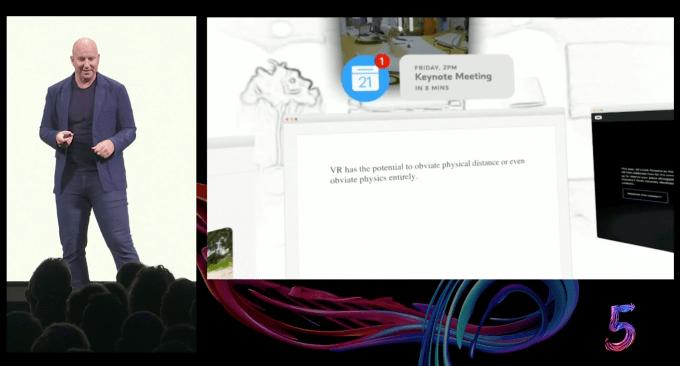
VP of VR/AR Andrew Bosworth

The absence of OculusVR co-founders onstage at Facebook’s biggest VR event of the year comes as a flurry of news circulates surrounding the former leaders of high-profile Facebook acquisitions. Earlier this week, Instagram’s co-founders Kevin Systrom and Mike Krieger announced they were unexpectedly leaving the company. Today, we heard more WhatsApp founder Brian Acton who left Facebook earlier this year and walked away from $850 million after growing dissatisfied with the direction of the company he originally built.
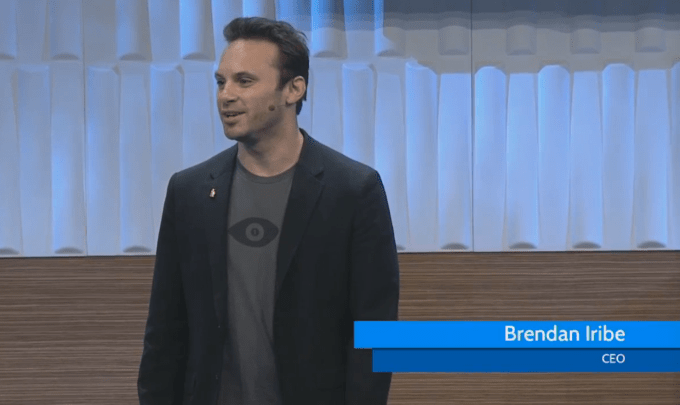
From 2014

Oculus has had a more turbulent time at Facebook than other acquisitions, the company was at the center of a $3 billion lawsuit last year with ZeniMax Media over the founding of the company and the theft of intellectual property. Ultimately, Facebook was made to pay up $250 million.

Founder Palmer Luckey also proved to be quite the headache for Facebook’s public communications after his donation to an anti-Clinton group during the 2016 election led a firestorm of negative press. Luckey left Facebook last year. While the company’s other co-founders held onto leadership roles following the acquisition, a big shakeup at the end of 2016 downgraded the roles of then-CEO Brendan Iribe and then-VP of Product Nate Mitchell, with Xiaomi’s Barra coming onboard later to lead Oculus as Facebook’s VP of VR reporting directly to Zuckerberg.

The OculusVR co-founders have been taking more of a backseat role in the past couple of years at events as well. While Iribe and Luckey held a major presence during the keynotes at early conferences, last year, only Mitchell took to the stage. This year there were plenty of callbacks to Connect keynotes of the past with early employees like Chief Scientist Michael Antonov speaking about the future of the VR platform, but ultimately none of the startup’s original leadership were present onstage during the nearly 2-hour presentation.

As Facebook continues to shift its high-profile acquisitions away from autonomy and further under its core leadership umbrella, the future of founding leaders driving the public vision of the companies they originally built seems even more uncertain.

more Oculus Connect 5 coverage


from TechCrunch https://ift.tt/2Qfnhg7
via IFTTT

Comments

Popular posts from this blog

The Silent Revolution of On-Device AI: Why the Cloud Is No Longer King

Introduction For years, artificial intelligence has meant one thing: the cloud. Whether you’re asking ChatGPT a question, editing a photo with AI tools, or getting recommendations on Netflix — those decisions happen on distant servers, not your device. But that’s changing. Thanks to major advances in silicon, model compression, and memory architecture, AI is quietly migrating from giant data centres to the palm of your hand. Your phone, your laptop, your smartwatch — all are becoming AI engines in their own right. It’s a shift that redefines not just how AI works, but who controls it, how private it is, and what it can do for you. This article explores the rise of on-device AI — how it works, why it matters, and why the cloud’s days as the centre of the AI universe might be numbered. What Is On-Device AI? On-device AI refers to machine learning models that run locally on your smartphone, tablet, laptop, or edge device — without needing constant access to the cloud. In practi...

Apple’s AI Push: Everything We Know About Apple Intelligence So Far

Apple’s WWDC 2025 confirmed what many suspected: Apple is finally making a serious leap into artificial intelligence. Dubbed “Apple Intelligence,” the suite of AI-powered tools, enhancements, and integrations marks the company’s biggest software evolution in a decade. But unlike competitors racing to plug AI into everything, Apple is taking a slower, more deliberate approach — one rooted in privacy, on-device processing, and ecosystem synergy. If you’re wondering what Apple Intelligence actually is, how it works, and what it means for your iPhone, iPad, or Mac, you’re in the right place. This article breaks it all down.   What Is Apple Intelligence? Let’s get the terminology clear first. Apple Intelligence isn’t a product — it’s a platform. It’s not just a chatbot. It’s a system-wide integration of generative AI, machine learning, and personal context awareness, embedded across Apple’s OS platforms. Think of it as a foundational AI layer stitched into iOS 18, iPadOS 18, and m...

Max Q: Anomalous

Hello and welcome back to Max Q! Last week wasn’t the most successful for spaceflight missions. We’ll get into that a bit more below. In this issue: First up, a botched launch from Virgin Orbit… …followed by one from ABL Space Systems News from Rocket Lab, World View and more Virgin Orbit’s botched launch highlights shaky financial future After Virgin Orbit’s launch failure last Monday, during which the mission experienced an  “anomaly” that prevented the rocket from reaching orbit, I went back over the company’s financials — and things aren’t looking good. For Virgin Orbit, this year has likely been completely turned on its head. The company was aiming for three launches this year, but everything will remain grounded until the cause of the anomaly has been identified and resolved. It’s unclear how long that will take, but likely at least three months. Add this delay to Virgin’s dwindling cash reserves and you have a foundation that’s suddenly much shakier than before. ...