For anyone who wants to get a piece of content they’ve created out there, the number of platforms and formats means it’s not so simple as it used to be. GlossAi is a startup aiming to automate the process using (what else?) AI, and its approach of turning a half hour of content into an infinity of short clips and posts may not be palatable to everyone, investors are betting on the tech to the tune of $8 million seed round.
There are already plenty of automatic editing and snipping tools out there, from big names like Adobe and generative AI startups like QuickVid. It wouldn’t be accurate to say they’ve reached mainstream use (or perhaps even that they are ready for it), but the idea is certainly in circulation.
Tel Aviv-based GlossAi sets itself apart by accomplishing a sort of middle road between purely generated stuff and intelligent clipping of your existing video. The problem they aim to solve is the large volume of webinars, presentations, and interviews that more or less disappear into the ether after being posted in full to something like YouTube.
If instead of simply making the whole available on one platform, you could split it up onto multiple platforms and media formats, that would help achieve reach and get more ROI for your production cost.
Say you’ve got a half-hour interview between a CEO and the head of a partner organization. Let’s be honest, not a ton of people are going to take the time to watch the whole thing for no particular reason. As any producer knows, you can cut out about 90% of the content and increase the viewership. But even a three minute video is a lot if you’re watching it on your phone while waiting in line at the store!
GlossAi’s approach is to take that interview and not just make a highlight reel, but also automatically produce things like 15-second snippets with matching stock (or generated) imagery, blog posts distilled from the transcript, ebooks or slide decks that summarize each part, social channel content, and so on. Snackable, as some would say.
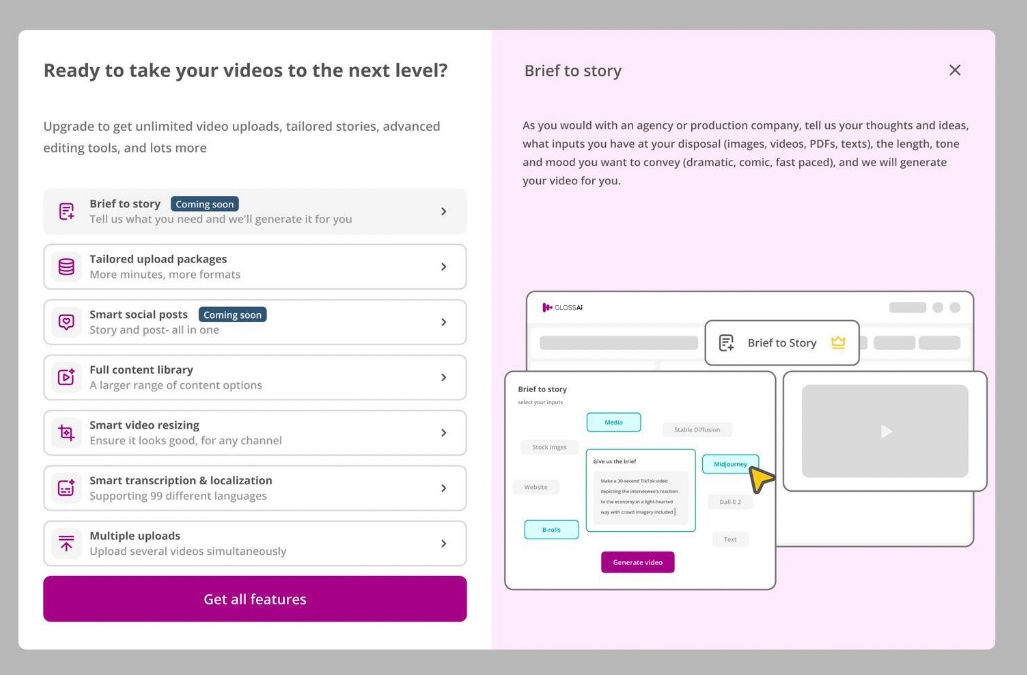
Image Credits: GlossAi
Each can be tuned with different lengths, voiced, and a few other dials and levers, naturally. The company has its own multi-modal models and are focused narrowly on “verbal content rich” media, as opposed to home movies or more creative endeavors.
If that sounds like it lets producers carpet bomb the web with their content, I’ve got bad news for you — they already do. It’s just a lot more work, usually involving a lot of automation anyway.
As leaders in AI have pointed out, this kind of thing is becoming increasingly common, and though there are legitimate worries that it will lead to increased spam and such, it also is a useful tool for people who just want to put their work out there.
And just because a machine learning model is helping doesn’t mean it’s AI all the way down — as many have found with ChatGPT and other tools, getting a rough draft of what you want is a great way to start your own creative process. You might be an expert at fixing mechanical watches, but perhaps you aren’t at turning your hour-long videos into something people can engage with on their own terms.
Of course many users will be in corporations that have a lot of internal presentations, trainings, process tutorials, and so on. Not that every meeting needs to be a TikTok, but sometimes it might be nice to get a deck version afterwards!
The $8 million seed round was led by New Era Capital Partners, with participation by Guidestar Ventures, 97212 Ventures, MindCET Ventures, Ginossar Ventures, Maccabee Ventures, Rafi Gidron, the Zipris Family, and others.
GlossAi’s generative highlights are a glimpse of content’s crowded future by Devin Coldewey originally published on TechCrunch
from TechCrunch https://ift.tt/Xsg1DC2
via IFTTT
Comments
Post a Comment