
Unagi throws in the towel on its $700K Model Eleven scooter Indiegogo campaign

345 backers dug into their pockets to the tune of more than $700,000, but the scooter they backed – the Model Eleven – will never see the light of day. The company is offering its backers three options to make up for it, including a full refund, or a different model electric scooter.

Hardware can be excruciatingly hard – I should know, I ran a $500,000 Kickstarter project I very publically failed to deliver on – and crowdfunding projects have a shadow side: Manufacturing and business models never match up with the models you build at the beginning of a product development cycle. In the case of Unagi, the company’s CEO David Hyman told me it discovered that its subscription model works far better than its planned “build ’em then sell ’em” model.

We wrote about the scooter when it was first announced.
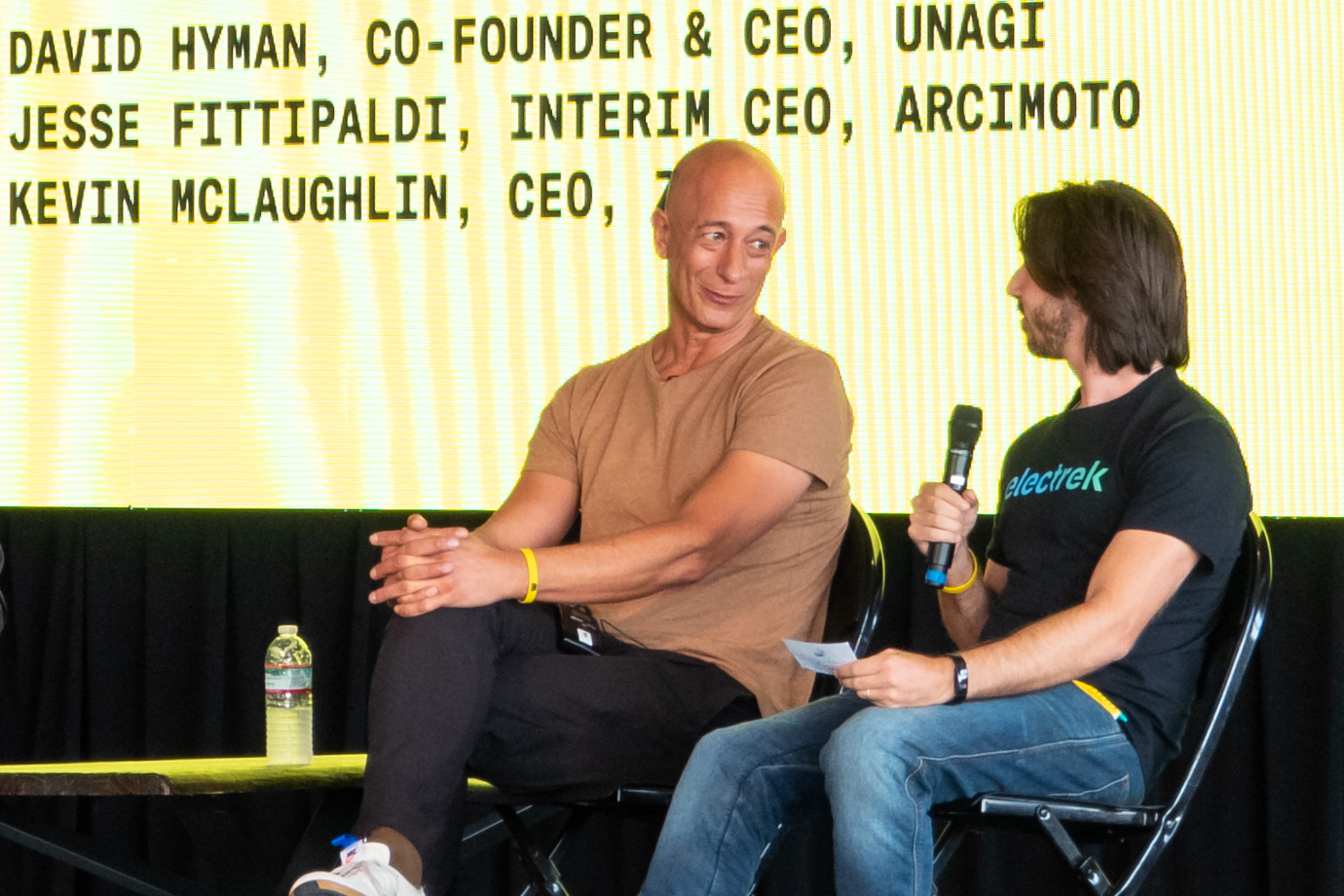
David Hyman, Co-founder and CEO at Unagi, speaking at a panel at Micro Mobility America


“With the incredible wind in our sails around our subscription offering, and how this works as a superior business model for us as well as consumer adoption (where our daily subscriber count trumps our sales by 20 to 1), the Model Eleven, priced as a subscription would have been prohibitively expensive for material adoption,” Hyman told me in an email. “We always envisioned the Eleven to be a low-margin passion project we’d sell direct only, and not through retailers. But since we don’t believe it will work under subscription at that high price point, we’ve made the very hard decision to leave it behind.”

The company is offering its backers three choices to keep them happy, in a move that shows that the company cares deeply about its customers (and its reputation). The company’s Indiegogo backers backed the project with an average of $2,000 or so, each. They get to choose from:

  1. A full refund
  2. A 3-year All-Access subscription to the Model One Voyager, with color choice, guaranteed new scooter, and theft insurance included. Scooter arrives in November. A month prior to formal release. (Valued at $2,412)
  3. Two Voyager scooters to own, including its standard 1-year warranty. (Valued at $2,390)

Indiegogo backers can expect an email from the company today outlining the above options.

Unagi throws in the towel on its $700K Model Eleven scooter Indiegogo campaign by Haje Jan Kamps originally published on TechCrunch


from TechCrunch https://ift.tt/dzvkgHn
via IFTTT

Comments

Popular posts from this blog

The Silent Revolution of On-Device AI: Why the Cloud Is No Longer King

Introduction For years, artificial intelligence has meant one thing: the cloud. Whether you’re asking ChatGPT a question, editing a photo with AI tools, or getting recommendations on Netflix — those decisions happen on distant servers, not your device. But that’s changing. Thanks to major advances in silicon, model compression, and memory architecture, AI is quietly migrating from giant data centres to the palm of your hand. Your phone, your laptop, your smartwatch — all are becoming AI engines in their own right. It’s a shift that redefines not just how AI works, but who controls it, how private it is, and what it can do for you. This article explores the rise of on-device AI — how it works, why it matters, and why the cloud’s days as the centre of the AI universe might be numbered. What Is On-Device AI? On-device AI refers to machine learning models that run locally on your smartphone, tablet, laptop, or edge device — without needing constant access to the cloud. In practi...

Apple’s AI Push: Everything We Know About Apple Intelligence So Far

Apple’s WWDC 2025 confirmed what many suspected: Apple is finally making a serious leap into artificial intelligence. Dubbed “Apple Intelligence,” the suite of AI-powered tools, enhancements, and integrations marks the company’s biggest software evolution in a decade. But unlike competitors racing to plug AI into everything, Apple is taking a slower, more deliberate approach — one rooted in privacy, on-device processing, and ecosystem synergy. If you’re wondering what Apple Intelligence actually is, how it works, and what it means for your iPhone, iPad, or Mac, you’re in the right place. This article breaks it all down.   What Is Apple Intelligence? Let’s get the terminology clear first. Apple Intelligence isn’t a product — it’s a platform. It’s not just a chatbot. It’s a system-wide integration of generative AI, machine learning, and personal context awareness, embedded across Apple’s OS platforms. Think of it as a foundational AI layer stitched into iOS 18, iPadOS 18, and m...

Billionaire clothing dynasty heiress launches Everybody & Everyone to make fashion sustainable

Veronica Chou’s family has made its fortune at the forefront of the fast fashion business through investments in companies like Michael Kors and Tommy Hilfiger . But now, the heiress to an estimated $2.1 billion fortune is launching her own company, Everybody & Everyone , to prove that the fashion industry can be both environmentally sustainable and profitable. There’s no argument about the negative impacts of the fashion industry on the environment. The textiles industry primarily uses non-renewable resources — on the order of 98 million tons per year. That includes the oil to make synthetic fibers, fertilizers to grow cotton, and toxic chemicals to dye, treat, and produce the textiles used to make clothes. The greenhouse gas footprint from textiles production was roughly 1.2 billion tons of CO2 equivalent in 2015 — more than all international flights and maritime shipments combined (and a lot of those maritime shipments and international flights were hauling clothes). The lit...