Here’s a bit of a curve ball from Apple. A month-and-a-half or so after launching the Fitness+ app premium workout service, the company’s offering up an add-on intended to offer an exercise dimension beyond the confines of iOS (and your living room). Arriving today for Fitness+ subscribers, Time to Walk is a new, guided walking tour hosted by a rotating cast of celebrity guests.
It’s a pretty diverse cast, as evidenced by the first round of names, which are dropping via a software update today. Included in the first five are Dolly Parton – who is probably about as universally beloved a celebrity as exists in 2021 – and Warriors power forward Draymond Green, who is no doubt a less universal, because, well, sports. Also included in the first round are musician Shawn Mendes and Orange is the New Black star Uzo Aduba.
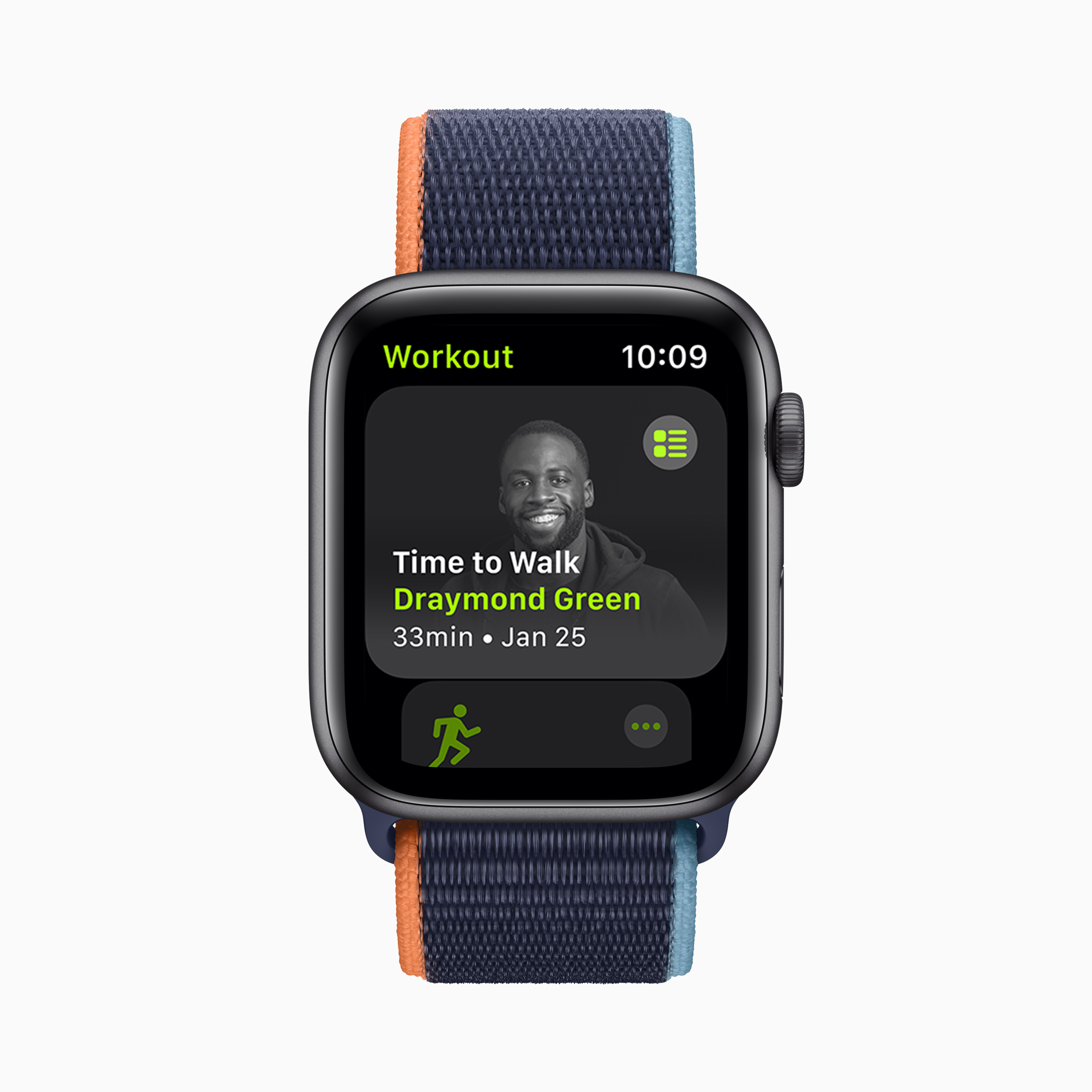
Image Credits: Apple
There are five episodes up front, which will be available as activity cards on the Apple Watch Workout app. In fact, they should start showing as cards in the app’s feed shortly. Going forward, they’ll be updated at a pace of one a week.
The experience is straightforward on the face of it. Essentially, Apple asks guests to record themselves on a walk, telling stories and sharing three songs. Music is played through the app and images are delivered to the small screen in an effort to build a semi-immersive (but not distracting) accompaniment for your own walk. You can save the songs on an Apple Music playlist or save the episode for later, if you want to listen again. For those who utilize wheelchairs for mobility, the feature will appear as “Time to Push,” which builds on top of the wheelchair-based fitness tracking Apple introduced several year back.
An Apple Fitness+ subscription is required to follow along. That’s due, in part, to a deeper integration with the premium fitness service. Both are also tied directly into other Apple services, like Music, which the company has made a kind of foundational element of its workouts.
I’ve always been a big walker — trying to avoid driving or public transit when time and distance allow. But the past year has really prioritized the activity for me as both an excuse to leave my one-bedroom apartment and way to get a workout in with all of the gyms closed for months on end. It is, frankly, a pretty big factor in keeping me going throughout the pandemic.
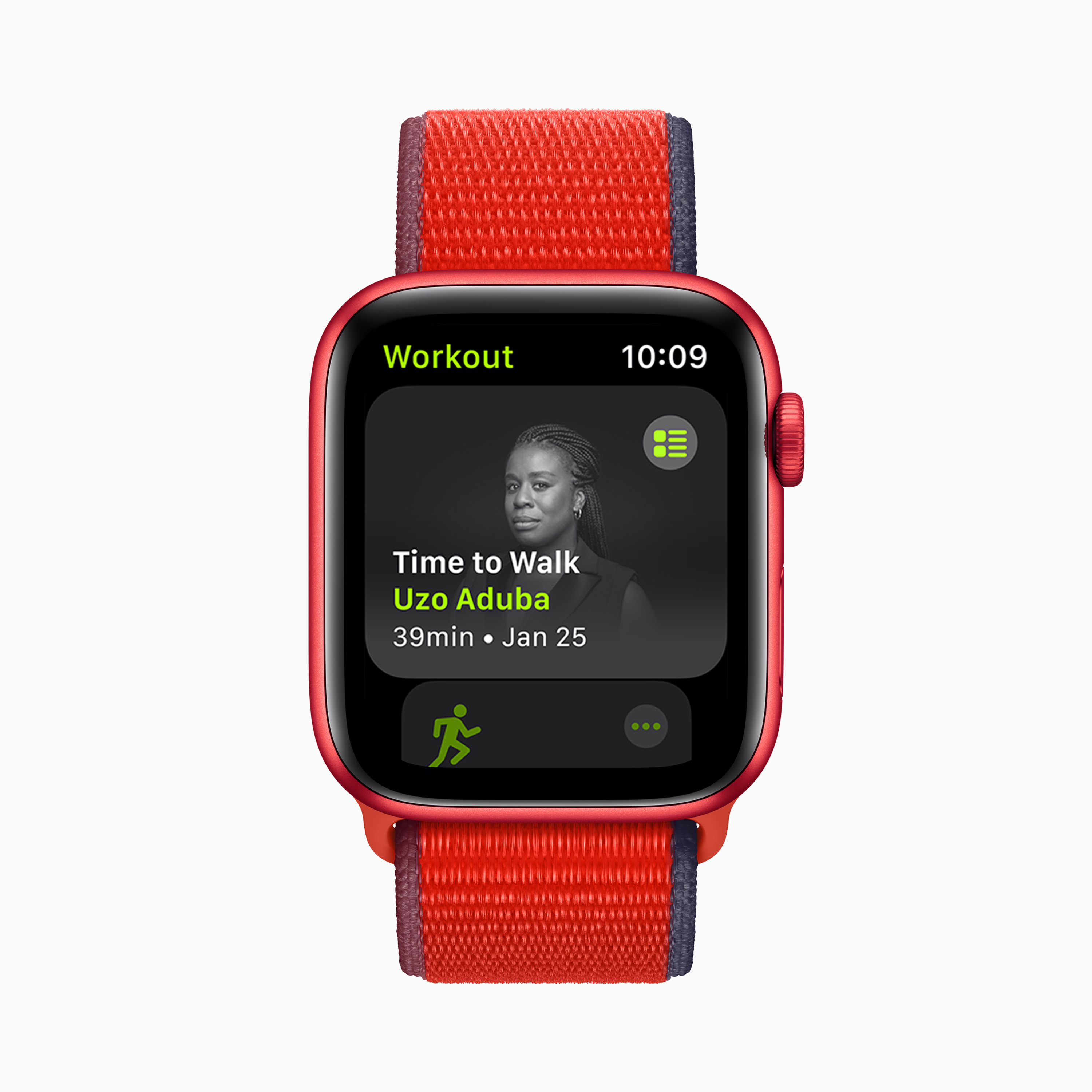
Image Credits: Apple
When I walk, I do so with music or podcasts. I’ve tried some “walking meditations” in the past, but found that the experiences have revolved around notions of “quiet reflection,” which doesn’t quit do the trick when you’re walking over the 59th street bridge into midtown Manhattan. Time to Walk turns the idea on its head a bit, by approximating the experience of walking along with someone. As they walk, they relate a kind of stream-of-consciousness, relating often personal stories in the process. The idea of course, being that walking is a head-clearing tool for many — creatives especially.
“Walking is the most popular physical activity in the world, and one of the healthiest things we can do for our bodies. A walk can often be more than just exercise: It can help clear the mind, solve a problem, or welcome a new perspective,” Apple’s Jay Blahnik said in a release. “Even throughout this challenging period of time, one activity that has remained available to many is walking. With Time to Walk, we’re bringing weekly original content to Apple Watch in Fitness+ that includes some of the most diverse, fascinating, and celebrated guests offering inspiration and entertainment to help our users keep moving through the power of walking.”
Like Fitness+ before it, the new feature is well-timed, as many parts of the world (the U.S. in particular) are still very much in the throes of pandemic-fueled shutdowns. It seems there’s a new story about a new potential mutation warning us off the sorts of things we used to do every day. Time to Walk is an effort to give you some interesting company for those walks.


from TechCrunch https://ift.tt/2YaBKj4
via IFTTT
Comments
Post a Comment