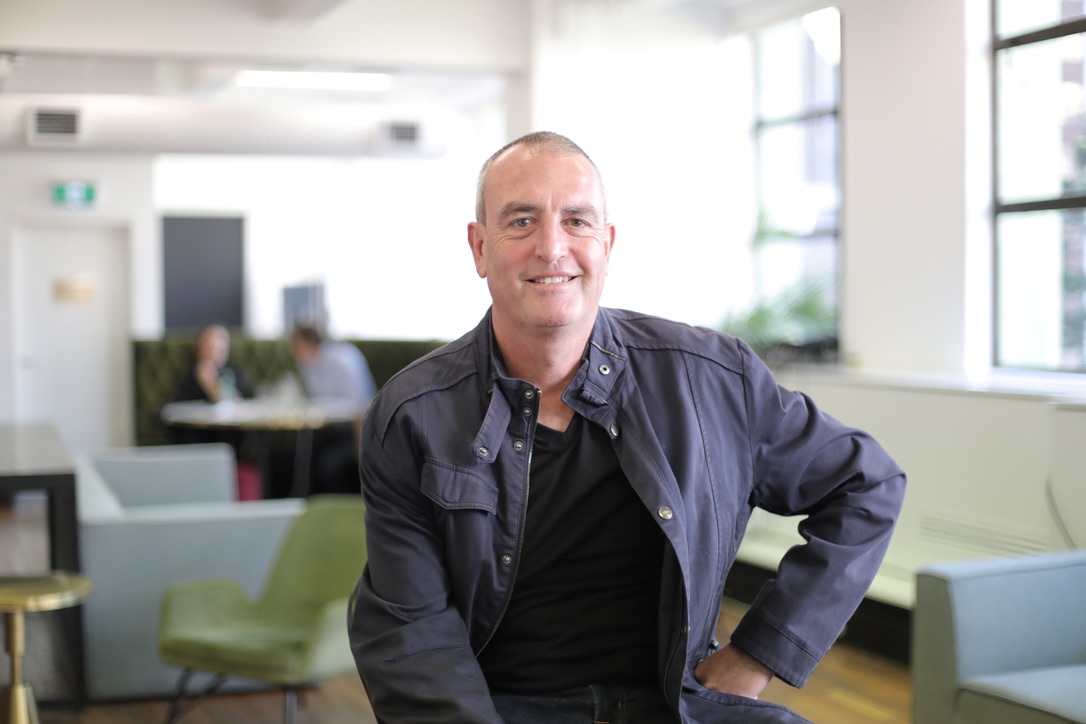
David Fairfull, CEO and co-founder of Metigy
Metigy, a marketing platform created to help small businesses automate more of the decision making in their online ad campaigns, has raised a Series B of $20 million AUD (about $14.6 million USD). The new funding, led by returning investor Cygnet Capital, will be used to grow the Sydney, Australia-based startup’s international customer base, especially in the United States and Southeast Asia. Other participants in the round included Regal Funds Management, OC Funds, Five V Venture Capital and Thorney, plus returning
Founded in 2015, Metigy is currently used by about 26,000 businesses and has channel partnerships with Google and Optus. About 44% of its customers are in Australia and New Zealand, while 26% are in Southeast Asia, and 22% are in the United States. The startup has raised AUD $27.1 million (about USD $19.9 million) in total.
Co-founder and chief executive officer David Fairfull told TechCrunch Metigy was created because “half of SMEs fail in the first two years and marketing is one of the top two reasons for this. It’s a global issue and a paradigm that can be changed by harnessing technology.”
Fairfull and other members of Metigy’s founding team previously worked at We Are Social, a global creative agency. While there, they “spotted an opportunity to give small businesses access to the same data and strategic insights” as larger marketing teams.
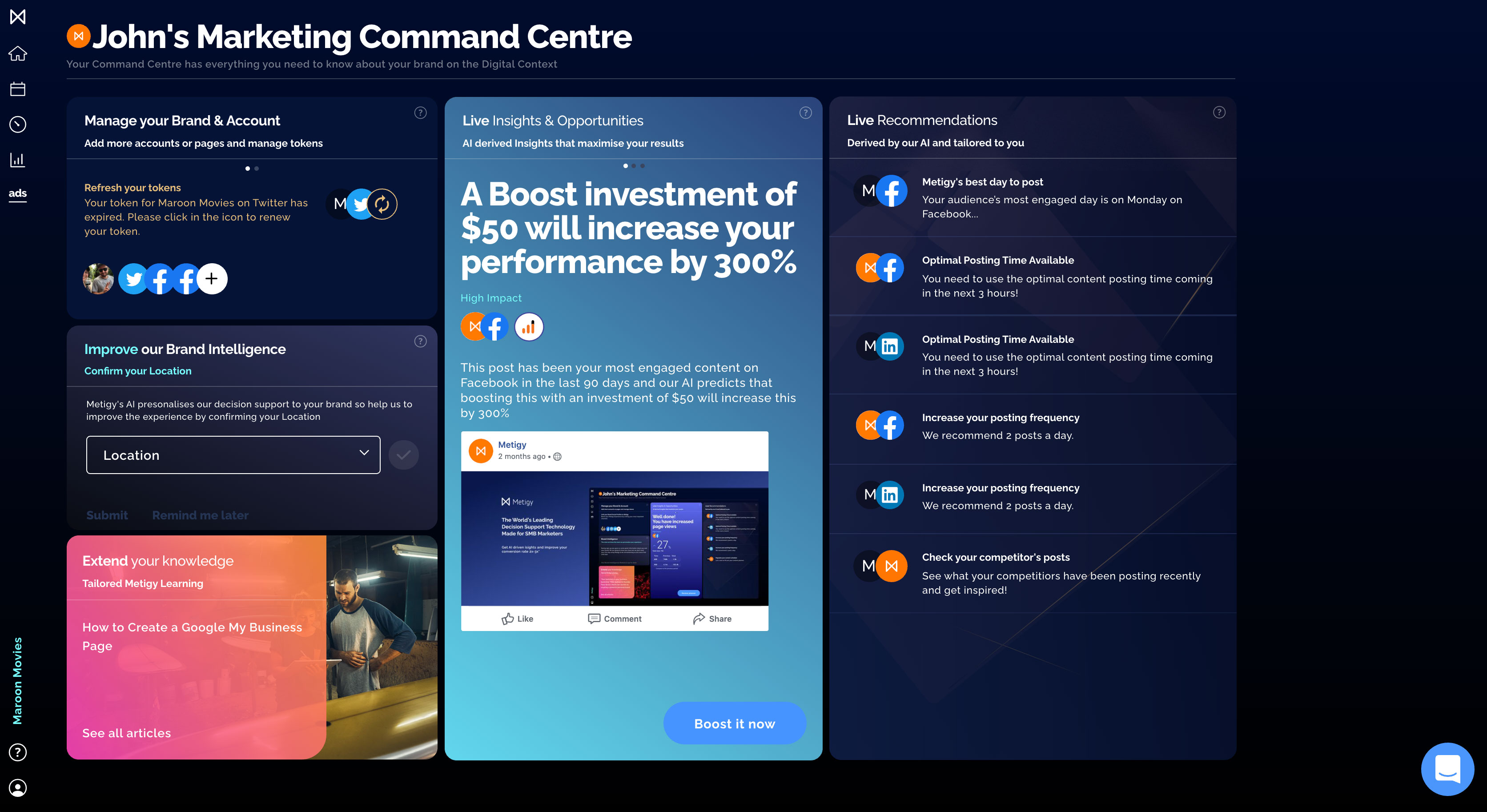
Marketing platform Metigy’s Command Center
Metigy’s platform gives more support to small or inexperienced marketing teams by using real-time data from their online advertising channels to create a livestream of recommendations. For example, it will tell marketing teams if they should start posting more content right away, use more hashtags or schedule more posts. The platforms also predicts what posts will result in the most conversions, helping companies decide how to spend their advertising budget.
For example, one of Metigy’s customers, parking app Share with Oscar, used Metigy to analyze what was trending on social media when members of the Royal Family visited Sydney. As a result, Fairfull said they were able to generate 2,700 customer engagements by spending about AUD $10 (about USD $7).
Other social marketing platforms like Hootsuite and Sprout Social are “essentially process solutions that help make the marketer more efficient,” said Fairfull. “However, if you don’t understand marketing, then all this process efficiency won’t help you gain results.”
Metigy is focusing on the United States and Southeast Asia because of the large number of SMEs there. By 2022, there is expected to be 30 million SMEs in the U.S. “On top of this, success in marketing technology is often benchmarked by success in the U.S., so expanding in this region adds credibility,” Fairfull added.
But in terms of volume, Southeast Asia offers a more promising market. “The real growth opportunity for us though is in Southeast Asia, where there is expected to be 150 million SMEs across the 11 markets by 2022,” Fairfull said. But the majority of them don’t have large marketing teams or access to the kind of ad technology that larger companies do. Companies in the region also tend to be more price sensitive, Fairfull added, so artificial intelligence and machine learning-based technology helps lower the cost of software like Metigy to an attractive price.


from TechCrunch https://ift.tt/3fs9vVe
via IFTTT
Comments
Post a Comment