Axon, the company formerly known as Taser and which provides the majority of police body cameras, has a few new tech tools for cops that could cut down on paperwork and improve response times. But at a time when the fundamental means and mission of police is being questioned, is this what’s really needed? Even the company’s CEO has reservations.
The new products Axon is delivering will no doubt be useful for police and emergency personnel across the country. The first is the ability to automatically transcribe voices on body camera footage (using machine learning, naturally). As someone who has to deal with a lot of spoken content, I’m easy to convince about the utility of such a tool.
One of the things body cams do is produce a record of officers’ interactions that need to be sorted and referred to in an organized way, but doing so is largely an affair of scrubbing manually through the video to note that such and such an exchange happened at this or that time, over and over. By providing a rough transcript right away, important events can be found and listed quickly, saving time and effort.
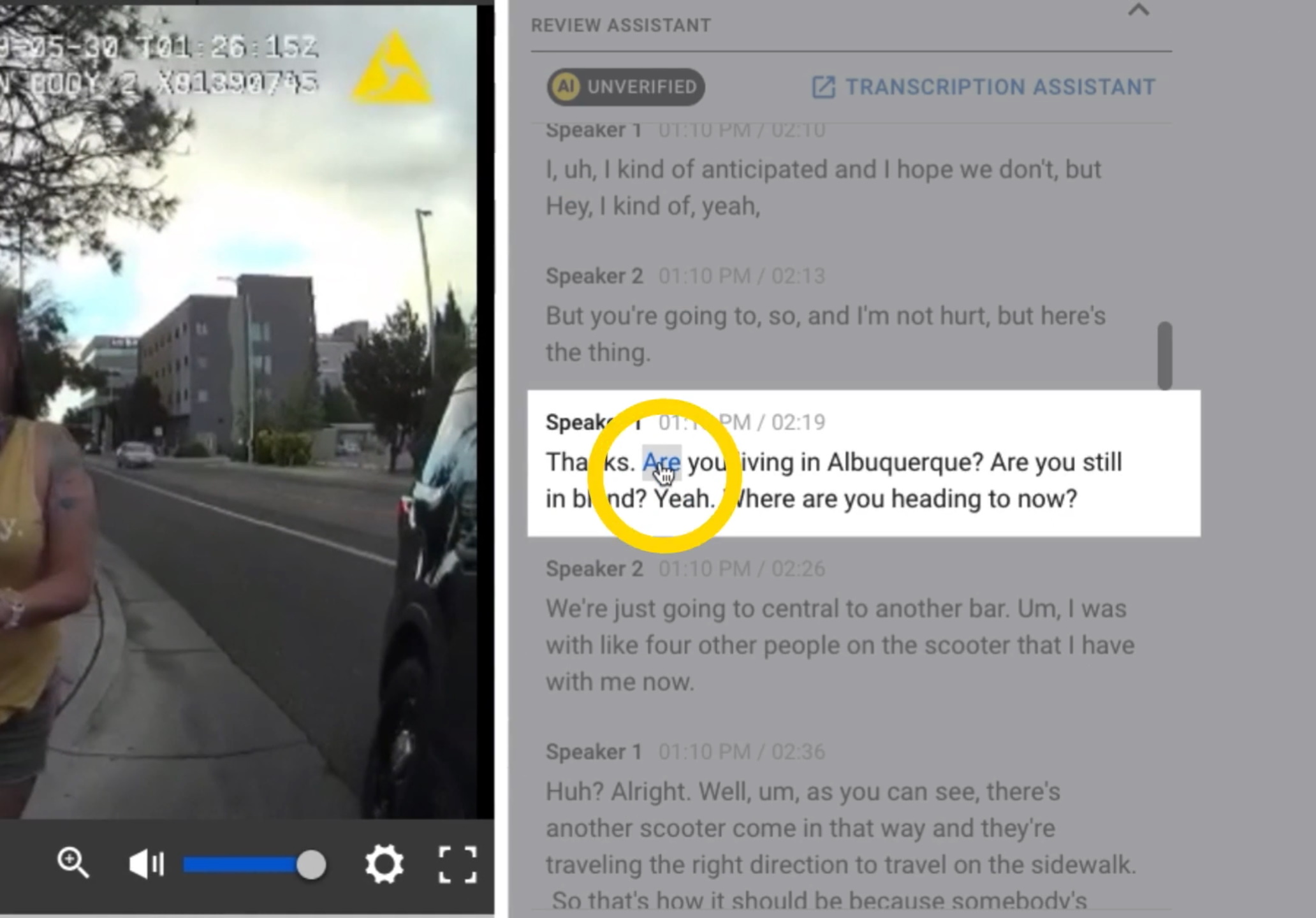
Words or phrases can be searched for and are linked to the corresponding timecode in the video. Image Credits: Axon
Rough is the word, though: Smith was clear that this is meant to be a transcription aid, not to produce court-ready documents. But the company “tried to design products that have value given today’s accuracy.”
I was concerned that this service, like others I’ve seen, may have higher error rates for people whose speech patterns differ from those of the training set’s. If you don’t have people with Puerto Rican or southern accents in the training data, or people using local slang or dialects, they get worse treatment by the algorithm. Smith noted that they license their speech recognition algorithm and tested on real-world data before choosing it, but didn’t have much to say on maintaining a diverse dataset to nip bias in the bud. Even if they didn’t write the algorithm, that’s important for both ethical and practical reasons, so hopefully the company will look into it.
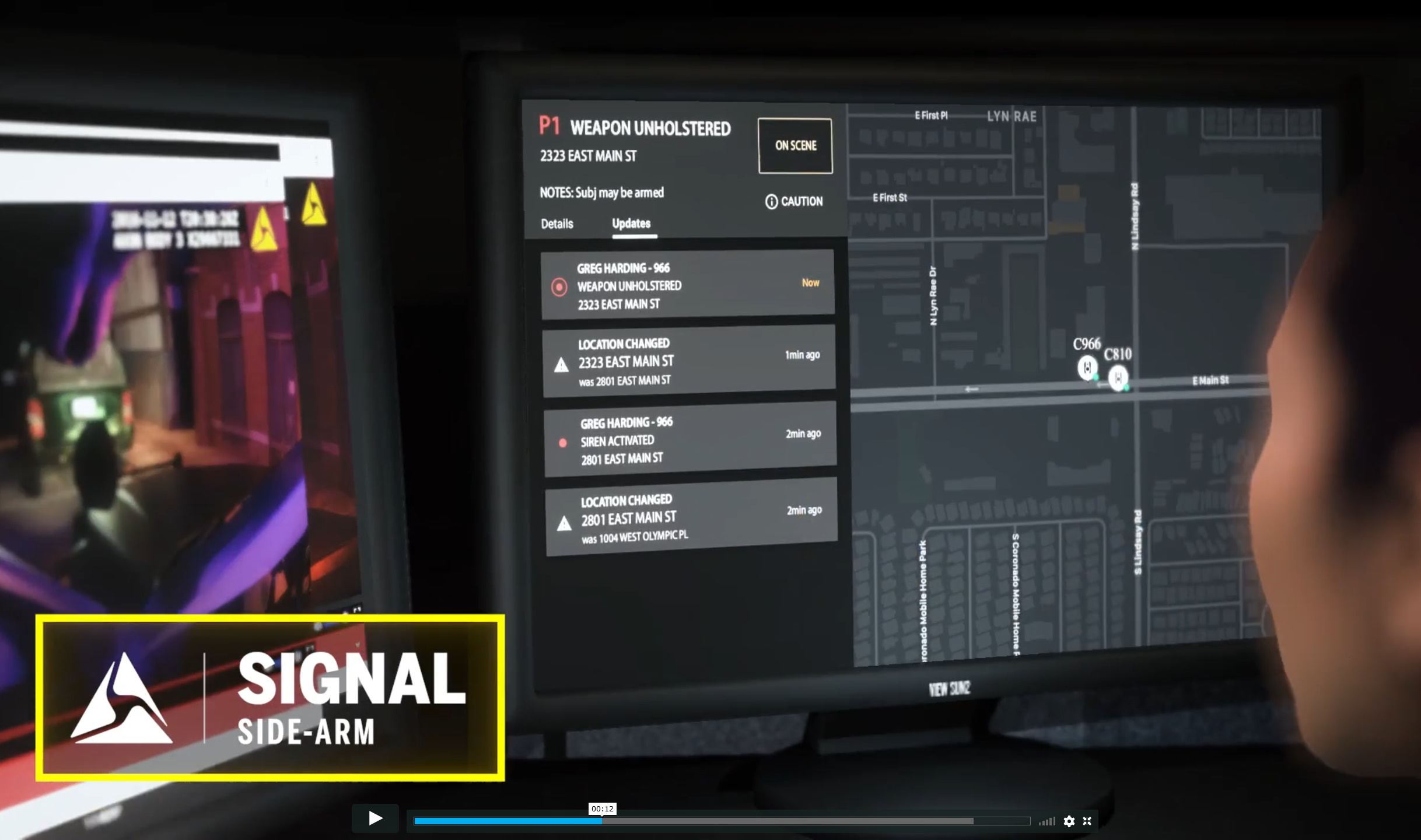
Image Credits: Axon
The other new item from Axon is a system aimed at integrating the disparate tools used in 911 dispatch and police crime centers.
“There’s a radio system, a call system for routing, the dispatch software, the dispatcher is usually typing notes furiously into like a command line interface in the software, they’re communicating with officers in the field over a push to talk radio and it’s not a dedicated channel. I’ve been impressed that these people do their job with such a thin pipe,” said Smith. “These systems aren’t integrated — they might be in totally different buildings. It feels like a lot of human glue, and it’s expensive and complicated. We see all that coming together.”
Its “Axon Respond” software helps put all that at a dispatcher’s fingertips, along with relevant data like whether an officer in the area is available, what their expertise is, and so on. Certainly anything that can make a 911 call go more smoothly and get the right resources to the right location would be welcome.
You can share their vision in the following concept video — the tools are in development but not quite ready to be filmed, it seems.
It’s not just about getting more cops faster, either, though that is an option.
“We have a customer looking at using our livestreaming not for tactical purposes but to get a live mental health professional on, to give an assessment of the person,” Smith noted. “We could potentially have a very different outcome when you have a trained professional versus a guy with a gun and a stick.”
More tools, more abuse?
That all sounds very nice, except the country is presently in the throes of a major crisis having to do with police abusing their authority and the tools they have available to them — guns, sticks, and body cameras.
A major criticism of body cameras is that while they are ostensibly to provide accountability, in fact police departments use them and the footage they capture very sparingly, withholding it if the cops look bad and publicizing it if it advances their preferred narrative. I’ve seen it happen myself so this is no longer a theoretical for me, and I asked Smith what he thought of it. He didn’t deny that this occurred, but disagreed that the tech is a net negative.
“Tech isn’t a panacea,” he said. “It’s not going to solve these problems for us. But how are you going to solve some of these problems without body cameras? People say body cameras didn’t prevent George Floyd’s death, and that’s true. But I think the George Floyd incident will lead to more lasting change because body cameras were there. If they weren’t, I don’t know that we’d be seeing the energy from police leaders around the country that we are. You’re seeing law enforcement leaders around the country saying, ‘That was wrong. They killed George Floyd.’ You never see that. Police just don’t come out and criticize their peers. But in this case there was enough evidence.”
Certainly the body camera footage has made the behavior of the officers who killed Floyd more clear. But the obvious counter to this is that, had bystanders not filmed the encounter in the first place, there’s a good chance that the body camera footage would never have been seen publicly at all. Even with half the country calling for it, the video practically had to be pried from the department’s hands.
The idea, however, that Axon is preparing for the law enforcement roles of the future by selling the tools for them today. But if, as I invited Smith to imagine, many major police departments do face defunding or significant cuts and restructuring, as seems likely over the next decade, where does that leave Axon?
“We aspire to be adaptable compared with the others in this space,” Smith said. “The way the government buys technology hasn’t rewarded companies that are agile but ones who know how to manage a complex procurements system. We’ve deliberately avoided that because we feel it’s a great way to rebuild the exact same problems we have today.”
“I’ve said, why don’t we do this with a clean sheet of paper and take the risk? And if it’s better our customers will find the way to buy it,” he continued. “When we started doing cloud software in 2009, our customers told us it was illegal for them to use it, so the next couple years were a series of ‘hell no’s. But now for 90 percent of agencies, it’s way safer. So we build stuff for the world that’s emerging. These catalysts do present challenges, but also opportunities.”


from TechCrunch https://ift.tt/2Epxo1q
via IFTTT
Comments
Post a Comment