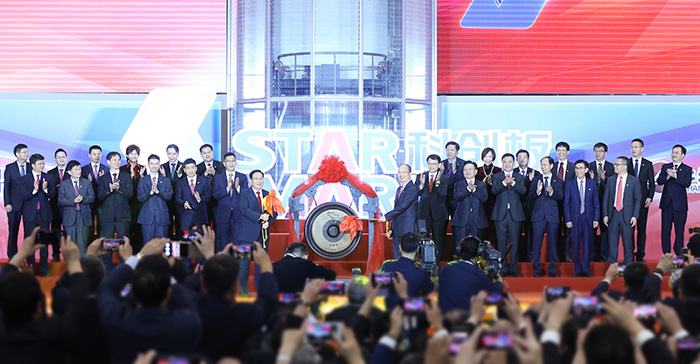
Chinese mobile-phone and device maker Transsion has listed in an IPO on Shanghai’s STAR Market, a Transsion spokesperson confirmed to TechCrunch.
Headquartered in Shenzhen, Transsion is a top-seller of smartphones in Africa under its Tecno brand. The company has also started to support venture funding of African startups.
Transsion issued 80 million A-shares at an opening price of 35.15 yuan (≈ $5.00) to raise 2.8 billion yuan (or ≈ $394 million).
A-shares are the common shares issued by mainland Chinese companies and are normally available for purchases only by mainland citizens.
Transsion’s IPO prospectus is downloadable (in Chinese) and its STAR Market listing application available on the Shanghai Stock Exchange’s website.
STAR is the Shanghai Stock Exchange’s new Nasdaq-style board for tech stocks that went live in July with some 25 companies going public.
Transsion plans to spend 1.6 billion yuan (or $227 million) of its STAR Market raise on building more phone assembly hubs and around 430 million yuan ($62 million) on research and development, including a mobile phone R&D center in Shanghai, a company spokesperson said.
To support its African sales network, Transsion maintains a manufacturing facility in Ethiopia. The company recently announced plans to build an industrial park and R&D facility in India for manufacture of phones to Africa.
The IPO comes after Transsion announced its intent to go public and filed its first docs with the Shanghai Stock Exchange in April.
Listing on STAR Market puts Transsion on China’s new exchange — seen as an extension of Beijing’s ambition to become a hub for tech startups to raise public capital. Chinese regulators lowered profitability requirements for the STAR Market, which means pre-profit ventures can list.
Transsion’s IPO comes when the company is actually in the black. The firm generated 22.6 billion yuan ($3.29 billion) in revenue in 2018, up from 20 billion yuan a year earlier. Net profit for the year slid to 654 million yuan, down from 677 million yuan in 2017, according to the firm’s prospectus.
Transsion sold 124 million phones globally in 2018, per company data. In Africa, Transsion holds 54% of the feature phone market — through its brands Tecno, Infinix and Itel — and in smartphone sales is second to Samsung and before Huawei, according to International Data Corporation stats.
Transsion has R&D centers in Nigeria and Kenya and its sales network in Africa includes retail shops in Nigeria, Kenya, Tanzania, Ethiopia and Egypt. The company also attracted attention for being one of the first known device makers to optimize its camera phones for African complexions.
On a 2019 research trip to Addis Ababa, TechCrunch learned the top entry-level Tecno smartphone was the W3, which lists for 3,600 Ethiopian Birr, or roughly $125.
In Africa, Transsion’s ability to build market share and find a sweet spot with consumers on price and features gives it prominence in the continent’s booming tech scene.
Africa already has strong mobile-phone penetration, but continues to undergo a conversion from basic USSD phones, to feature phones, to smartphones.
Smartphone adoption on the continent is low, at 34%, but expected to grow to 67% by 2025, according to GSMA.
This, added to an improving internet profile, is key to Africa’s tech scene. In top markets for VC and startup origination — such as Nigeria, Kenya, and South Africa — thousands of ventures are building business models around mobile-based products and digital applications.

If Transsion’s IPO enables higher smartphone conversion on the continent, that could enable more startups and startup opportunities — from fintech to VOD apps.
Another interesting facet to Transsion’s IPO is its potential to create greater influence from China in African tech, in particular as the Shenzhen company moves more definitely toward venture investing.
In August, Transsion funded Future Hub teamed up with Kenya’s Wapi Capital to source and fund early-stage African fintech startups.
China’s engagement with African startups has been light compared to China’s deal-making on infrastructure and commodities — further boosted in recent years as Beijing pushes its Belt and Road plan.
Transsion’s IPO is the second event this year — after Chinese owned Opera’s venture spending in Nigeria — to reflect greater Chinese influence and investment in the continent’s digital scene.
So in coming years, China could be less known for building roads and bridges in Africa and more for selling smartphones and providing VC for African startups.


from TechCrunch https://ift.tt/2m5IOhA
via IFTTT
Comments
Post a Comment