Hello and welcome back to Max Q. TC’s in-person Space event is almost upon us. Will you be there? Learn more about the event here. In this issue:
- Rocket Lab’s helicopter catch attempt ends in ocean splashdown
- ispace wants to stake its claim to the moon
- News from the FCC, Constellr and more
Rocket Lab’s helicopter catch attempt ends in ocean splashdown
Rocket Lab’s second attempt to catch a rocket booster mid-air using a helicopter was aborted, though it’s unclear at the time of writing what exactly went wrong.
Rocket Lab aims to recover its rocket boosters using a parachute and a helicopter — a bit different than SpaceX, whose boosters return to Earth by vertically landing on a pad. Instead, Rocket Lab’s technique is to equip the booster with a parachute to slow its descent, and keep a helicopter waiting nearby to snag it out of midair. From there, the plan is for the helicopter to carry the booster straight back to the company’s production complex.
But alas, we did not see a catch after this launch. Here’s what we know: After a nominal launch and payload deployment, the company’s Sikorsky S-92 helicopter did not make the catch attempt. Instead, the company recovered the booster from the ocean after it splashed down. We’ll be looking out for more information on what went wrong in the days ahead.
ispace wants to stake its claim to the moon with November launch
Tokyo-based startup ispace’s lunar ambitions will soon be put to the test, as the company gears up for its first launch at the end of this month.
The startup will attempt to send its “Hakuto-R” lander to the moon’s surface, kicking off an ambitious lunar exploration program of the same name. Founded in 2010, ispace is one of many emerging companies that want to foster new markets on and around the moon; on its website, it describes its goal as becoming “a gateway for private sector companies to bring their business to the moon.”
Being the middle- and last-mile delivery partner of the moon could prove to be lucrative, given the intensifying interest from both government space agencies and private companies in lunar exploration. But there’s more than far-off revenues at stake in this first launch; recent reporting suggested that ispace is preparing to list on the Tokyo Stock Exchange as early as this fiscal year.
While the company was previously targeting a launch window of November 9-15, ispace said Monday it was now aiming to launch no earlier than November 22. The new date was chosen “in careful coordination” with launch partner SpaceX, the startup said in a statement. Indeed, ispace founder and CEO Takeshi Hakamada confirmed that the lander had arrived in Cape Canaveral, Florida, via cargo plane in advance of launch.
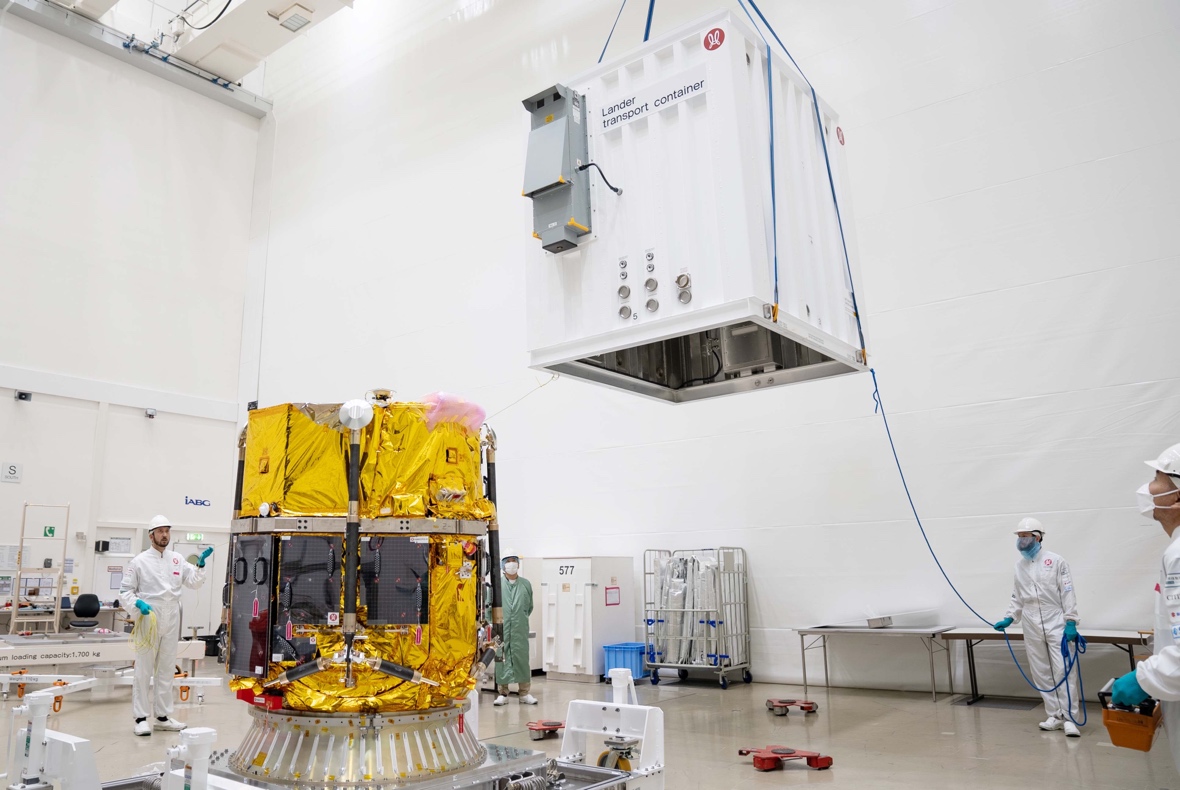
The ispace M1 Hakuto-R lander. Image Credits: ispace
More news from TC and beyond
- Arkisys is launching a new program called “Embark” for on-orbit payload services for SBIR and STTR Phase I entrants. (Arkisys)
- Blue Origin delivered its set of two BE-4 rocket engines to United Launch Alliance, which will be used on ULA’s heavy-lift Vulcan Centaur rocket as early as next year. (Blue Origin)
- China is releasing things into orbit using spaceplanes, and we don’t know what they are! (SpaceNews)
- China launched the third and final module for its Tiangong Space Station, and the rocket booster that carried it to orbit began its uncontrolled reentry back to Earth. (The New York Times/USSC)
- Constellr raised $10 million in seed funding for its space-based water monitoring system. (TechCrunch)
- Exotrail, a company developing last-mile satellite transportation, signed a launch services agreement with German launch startup Isar Aerospace. (Payload)
- Firefly Aerospace is seeking to raise up to $300 million in private funding at an undisclosed valuation. (Reuters)
- NASA’s Space Launch System rocket was rolled back out to the launch pad in advance of the next launch attempt on November 14. (CNN)
- NASA’s Psyche mission was delayed and an independent review board was assembled to investigate why. The report is back, and it’s not good: The review board identified multiple staffing issues at the agency’s Jet Propulsion Lab, including burnout and a lack of technical expertise in key positions. (NASA)
- Orbex, a small rocket startup based in Scotland, will oversee construction of the first spaceport for vertical rocket launches on the U.K. mainland. (Orbex)
- Rocket Lab was contracted by Inmarsat to develop and manufacture an L-band radio for NASA; it also delivered the final solar panels to Maxar that will end up on the space agency’s lunar Gateway orbital platform. (Rocket Lab/Rocket Lab)
- Sierra Space and Blue Origin will be participating in Japan Aerospace Exploration Agency’s feasibility study exploring g opportunities for Japan to participate in commercializing low Earth orbit. (Baker McKenzie)
- SpaceX is tentatively targeting early December for Starship’s first test flight, a NASA official said. The company is also now building seven Raptor 2 rocket engines a week. (!) (Ars Technica)
- SpaceX launched a Falcon Heavy for the fourth time ever in a mission for the United States Space Force. The double booster landing made more than a few jaws drop. (TechCrunch)
- Spire won a DARPA contract for a preliminary design of a satellite that would carry sensors to measure the ionosphere. (Spire)
- Terran Orbital landed an additional $100 million investment from Lockheed Martin, and announced it built its massive spacecraft manufacturing facility in California, rather than Florida as originally announced. (TechCrunch)
- The U.S. Federal Communications Division will undergo a major organizational shakeup in response to the explosion of activity in commercial space by establishing a Space Bureau to separate satellite policy issues from the overall “International Bureau,” FCC Chairwoman Jessica Rosenworcel said. (FCC)
- Virgin Galactic released its quarterly financial report and released details on how it plans to kickstart its space tourism service. (Space)
- Wyvern, a startup building satellites that capture hyperspectral imagery using telescopes that unfold in space, has raised $7 million in a seed plus round. (Wyvern)
Photo of the week
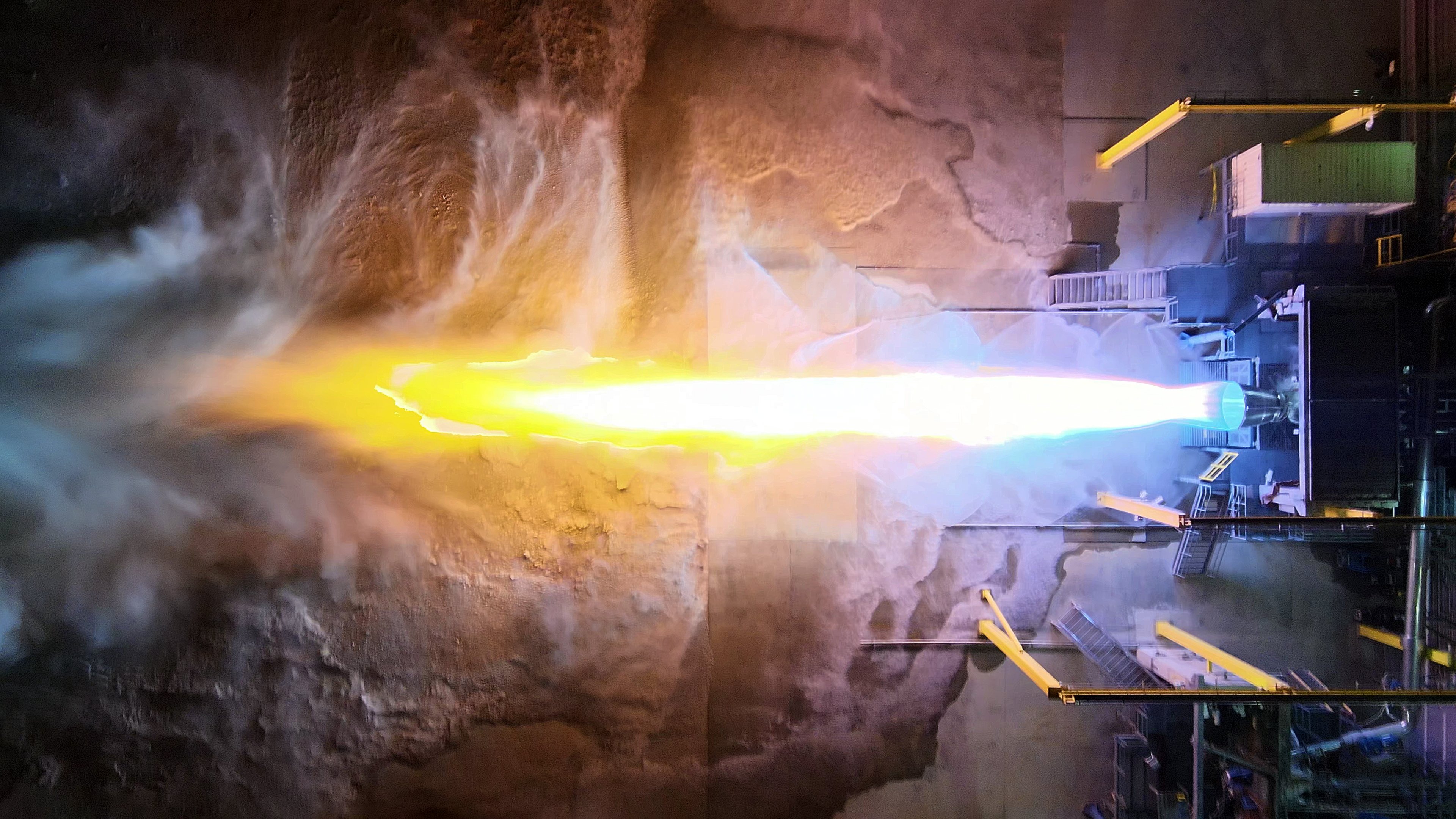
Blue Origin’s BE-4 rocket engine. Image Credits: Blue Origin
Max Q is brought to you by me, Aria Alamalhodaei. If you enjoy reading Max Q, consider forwarding it to a friend.
Max Q: Ocean splashdown by Aria Alamalhodaei originally published on TechCrunch
source https://techcrunch.com/2022/11/07/max-q-ocean-splashdown/
Comments
Post a Comment