Elon Musk’s mercurial leadership and half-baked product plans are already creating fertile ground for confusion on Twitter.
We’ve lost count of how many times Musk has changed his mind or offered contradictory claims about what a new paid $8 verification badge would do, but after pushing the feature live, fake accounts are seizing on the chaos.
Twitter’s bought blue check marks are now available for some paying subscribers, injecting the timeline with tweets that appear to be from official accounts. And apparently Musk’s Twitter skeleton crew made no meaningful changes to the visual language of the blue check, so right now it signals that you’re either really who you say you are — @CocaCola, for instance — or you’re somebody random who just coughed up $8 and got a stamp of approval.
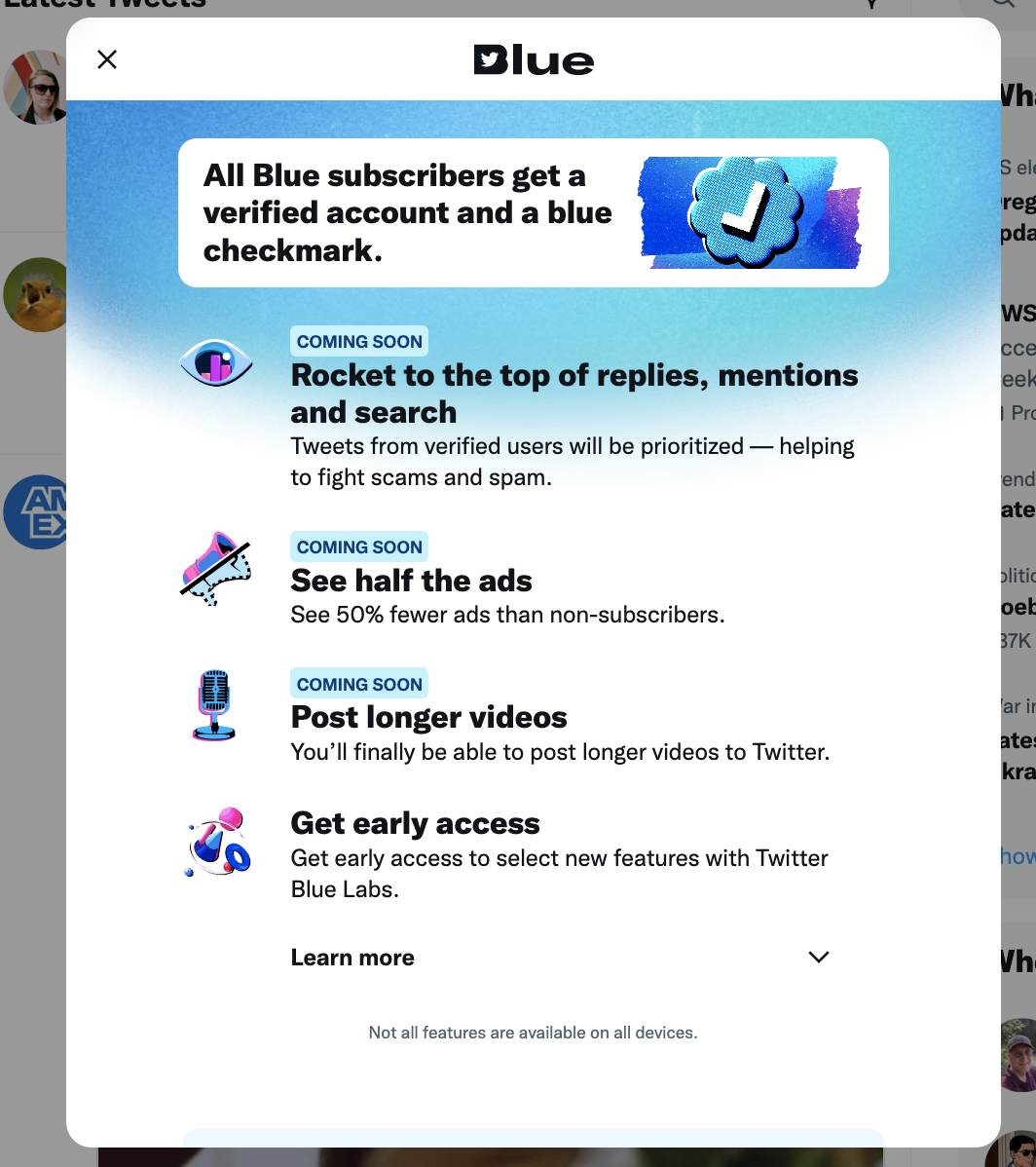
Now when tweets appear in Twitter’s timeline it’s impossible to visually distinguish the two categories of blue check accounts from one another. Doing so would require clicking through to examine a user’s follower count, which isn’t necessarily a reliable way to tell, or searching for whatever clues might be found in their other tweets. Clicking on the check mark itself from a profile page apparently displays different copy too, but like everything on Twitter right now, that is subject to change.
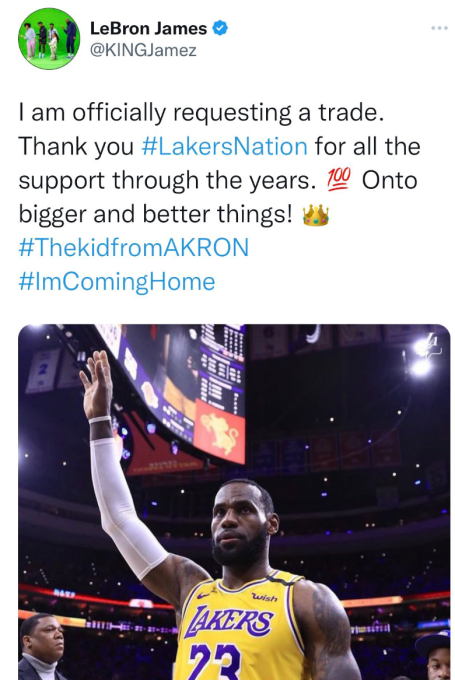
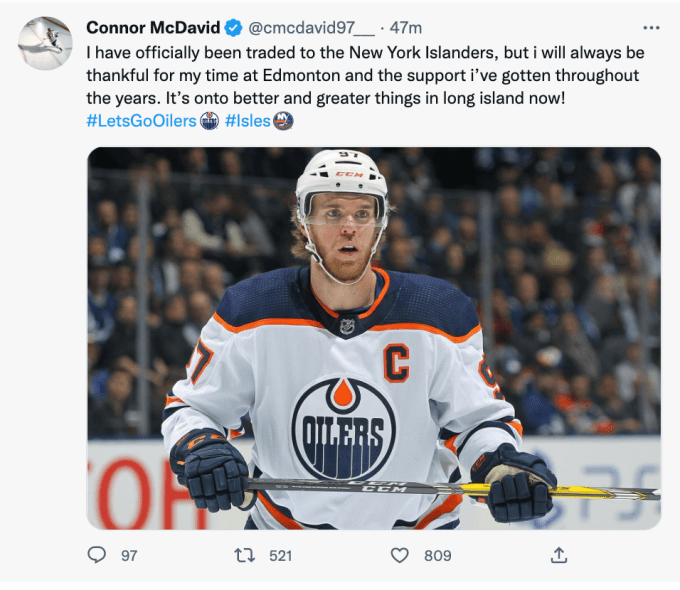
So far this has resulted in some quick attention for an account impersonating LeBron James, which announced that the basketball star was requesting a trade away from the Lakers. A few other athletes got the same treatment, including baseball pitcher Aroldis Chapman and NHL player Connor McDavid.
As we’ve reported, Musk has already changed his mind a number of times already on the scheme to get rid of bots and spam by making people pay $8 a month. But now that the feature is suddenly live, anyone can impersonate someone else for $8 a month and see their content boosted algorithmically without any vetting. (Though apparently that paid perk, like nearly all of the “new” Twitter Blue’s features beyond the blue check mark, is “coming soon.”)
All of those accounts are suspended now, but only after the tweets gained traction and caught the attention of Twitter moderators. With one half of the staff it was previously operating with, it’s impossible for Twitter to catch all of this stuff after the fact if it doesn’t have any interest in vetting at the time of payment, which Musk apparently doesn’t.
The implications for Twitter as a reliable news source and the potential for abuse here is massive. Musk held off on his haphazard plan until the day after the U.S. elections, but with many races not yet called we can definitely expect to see confusion that’s orders of magnitude more consequential than a fake basketball trade.
Misinformation potential aside, Musk’s plan also undermines the presence of celebrities — one of the things that makes Twitter interesting for the average user. If Twitter users can’t even reliably find prominent people like athletes, politicians and movie stars to follow, the platform’s value is going to fall off a cliff pretty fast, with its advertising revenue not far behind.
Fake Twitter accounts flock to blue check mark chaos by Taylor Hatmaker originally published on TechCrunch
source https://techcrunch.com/2022/11/09/fake-twitter-blue-check-lebron-musk/
Comments
Post a Comment