Hello and welcome back to Max Q. In this issue:
- An Artemis launch update
- Rocket Lab and Sierra Space’s new agreements for space transportation
- News from Axiom, OneWeb and more
By the way… TechCrunch Disrupt finally returns — live and in person — to San Francisco on October 18-20. Use this link to receive 15% off passes (excluding online and expo).
NASA provides an update on the Artemis I launch
NASA said it is looking to attempt the launch of the Artemis I mission on September 23 and 27, dates far enough away that the agency will hopefully have enough time to resolve the issues with the hydrogen line that led to the rocket being grounded during the first two launch attempts.
The agency must replace and re-seal leaking liquid hydrogen lines, then perform tests to ensure that the sealing worked, Jim Free, NASA’s associate administrator for exploration systems development, explained in a media briefing. NASA will not conduct a full wet dress rehearsal in addition to these tests. All of this work will take place on the launch pad, which saves the agency from having to roll the massive rocket back to the Vehicle Assembly Building at Kennedy Space Center.
The other major hitch is that these launch dates must be approved by the U.S. Space Force’s Eastern Range, which governs the launch schedule from the east coast of the United States. The Space Force will also need to provide a waiver for the rocket’s flight termination system, which runs on batteries and is only approved for use for 25 days. All in all, my fingers are crossed that engineers can complete all the work required before the next launch attempt.
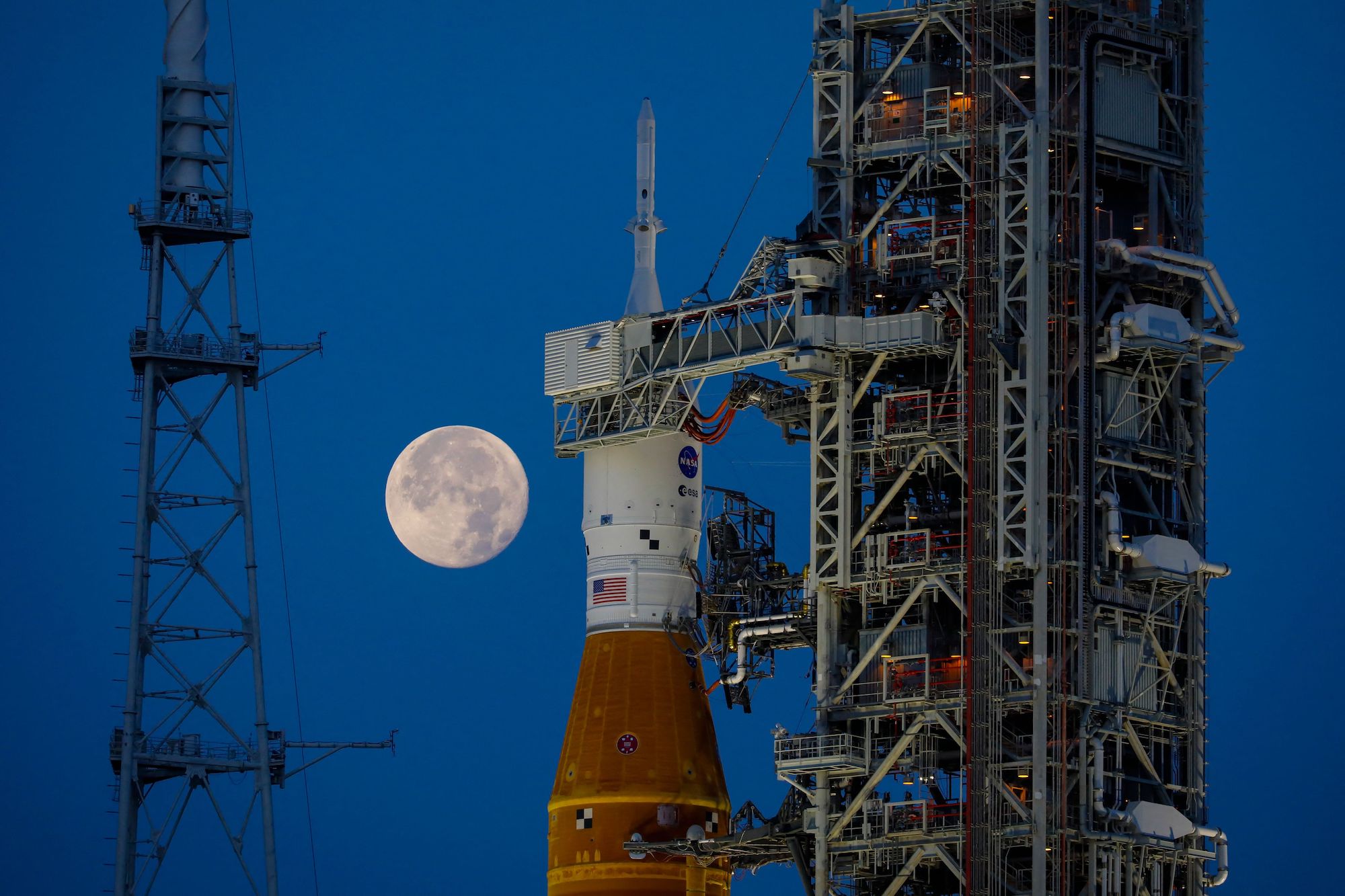
Image Credits: Eva Marie Uzcategui / Getty Images
Rocket Lab, Sierra Space sign agreements under US military’s rocket cargo project
Rocket Lab and Sierra Space have signed separate agreements with the U.S. Department of Defense (DOD) to explore how their respective flight systems — Rocket Lab’s Electron and Neutron rockets, Sierra Space’s Dream Chaser spaceplane — could be used for superfast cargo delivery on Earth.
The agreements are what’s known as Cooperative Research and Development Agreements (CRADAs), a vehicle to facilitate R&D work between the government and nongovernmental entities like startups and private companies. These specific CRADAs are with the U.S. Transportation Command (USTRANSCOM), an agency under the aegis of the DOD.
Under its agreement, Sierra Space and the military will jointly explore using its Dream Chaser plane for hypersonic space transportation for terrestrial cargo and personnel delivery. Under Rocket Lab’s agreement, it will work with the military to investigate using the Electron and Neutron launch vehicles, also for cargo delivery. While Electron has successfully reached orbit numerous times, both Neutron and Dream Chaser are still under development.
“Point-to-point space transportation offers a new ability to move equipment quickly around the world in hours, enabling a faster response to global emergencies and natural disasters,” Rocket Lab CEO Peter Beck said in a statement. “We’re excited to be collaborating with USTRANSCOM on this forward-thinking, innovative research program that could ultimately shift the way the Department of Defense considers logistics response options.”
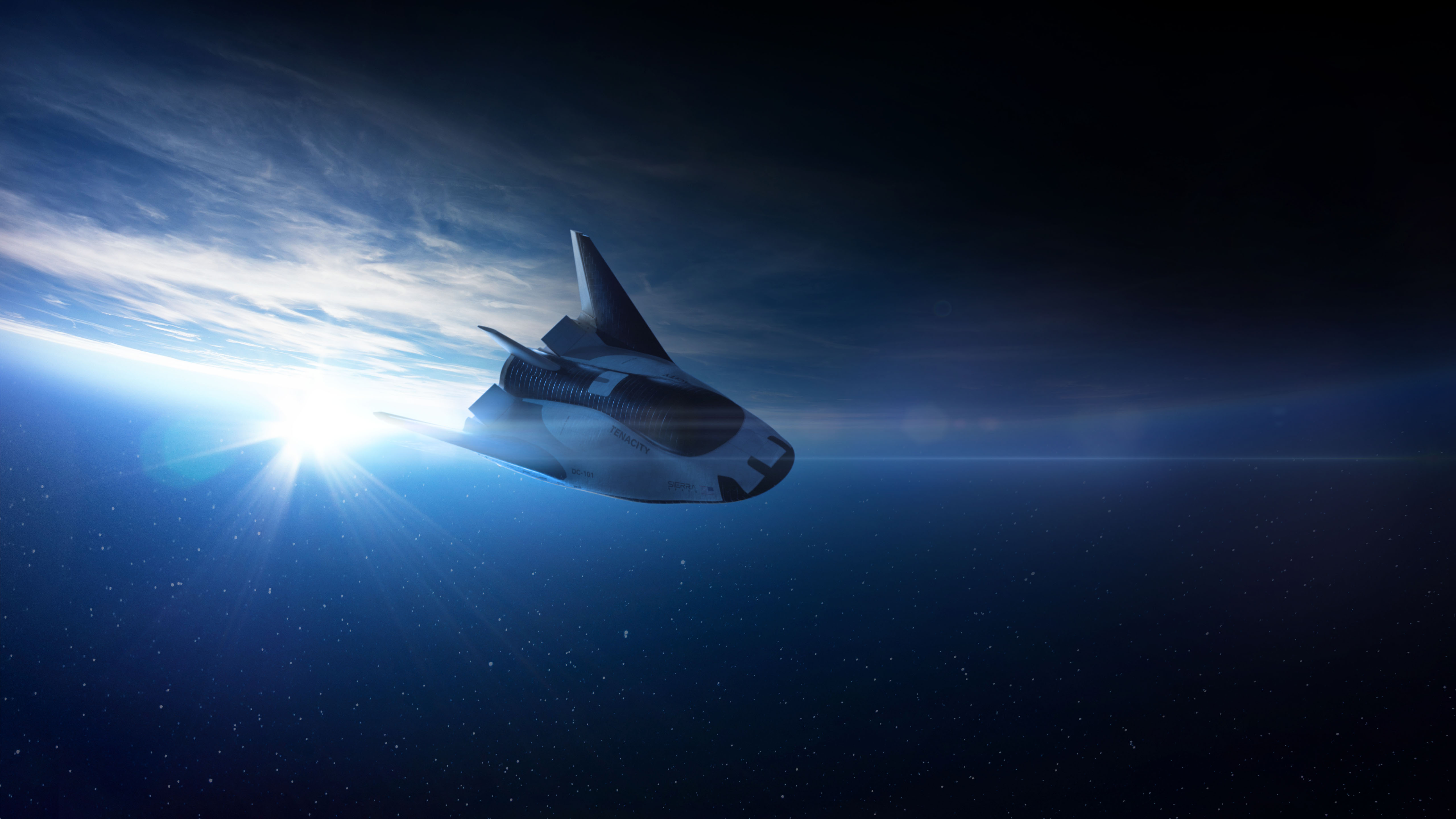
Image Credits: Sierra Space
More news from TC and beyond
- Albedo, a startup building a satellite constellation capable of capturing visible and thermal imagery, closed a $48 million Series A round, co-led by Breakthrough Energy Ventures and Shield Capital.
- Apple will soon allow iPhone users to send an emergency SOS via satellite connectivity.
- Axiom Space won a $228.5 million NASA contract to design the space suits and life support systems that will be worn by the Artemis III astronauts.
- China conducted two launches within two hours of each other, bringing its total number of orbital launches so far this year to 37. Meanwhile, the country is preparing a rocket to send the third module of the Tiangong space station to space in October.
- Countdown Capital raised $15 million for its second fund to back companies looking to, in the words of founder Jai Malik, “rebuild the American industrial base.”
- Europe launched an Ariane 5 rocket from French Guiana Wednesday. The rocket was carrying a communications satellite from French company Eutelsat.
- Huawei will be offering texting via satellites on its flagship Mate 50 series, announcing the news just one day before Apple made its own sat-comm equivalent.
- Masten Space Systems held an auction for its assets as part of its ongoing bankruptcy process, with Astrobotic submitting the highest bid at $4.5 million.
- Near Space Labs will share Earth observation imagery with researchers, nonprofits and universities for 12 months, through its Community Resilience and Innovation Earth Imagery Grant program.
- OneWeb incurred a $229 million impairment charge for fiscal year 2022 due to the postponement of multiple launches that were scheduled to go to space aboard Russian Soyuz rockets.
- South Korea’s lunar orbiter successfully executed a trajectory correction maneuver, a key part of its much longer journey to the moon.
- SpaceX conducted an eight-second static fire test of all six engines on the Ship 24 prototype from its Starbase facility in southeast Texas. The test caused a handful of grass fires in the area around the pad.
- Taranis, a company developing a crop intelligence platform, raised a $40 million Series D led by European climate tech fund Inven Capital.
- The U.S. Federal Communications Commission may enact new rules setting a five-year limit for the disposal of satellites in low Earth orbit once they have completed their mission objectives. The current recommendation for satellite de-orbiting is 25 years following mission completion.
Photo of the week

Image Credits: NASA
NASA tweeted this 1969 photo of Queen Elizabeth II with Michael Collins, Neil Armstrong and Buzz Aldrin at Buckingham Palace. The trio met with the queen as part of the Apollo II Goodwill Tour. Whatever your feelings about the British monarchy, the world lost a paragon of the twentieth century this week.
Max Q is brought to you by me, Aria Alamalhodaei. If you enjoy reading Max Q, consider forwarding it to a friend.
Max Q: The waiting game by Aria Alamalhodaei originally published on TechCrunch
from TechCrunch https://ift.tt/hqC2idv
via IFTTT
Comments
Post a Comment