UI-licious gets $1.5M led by Monk’s Hill Ventures to simplify automated UI testing for web apps

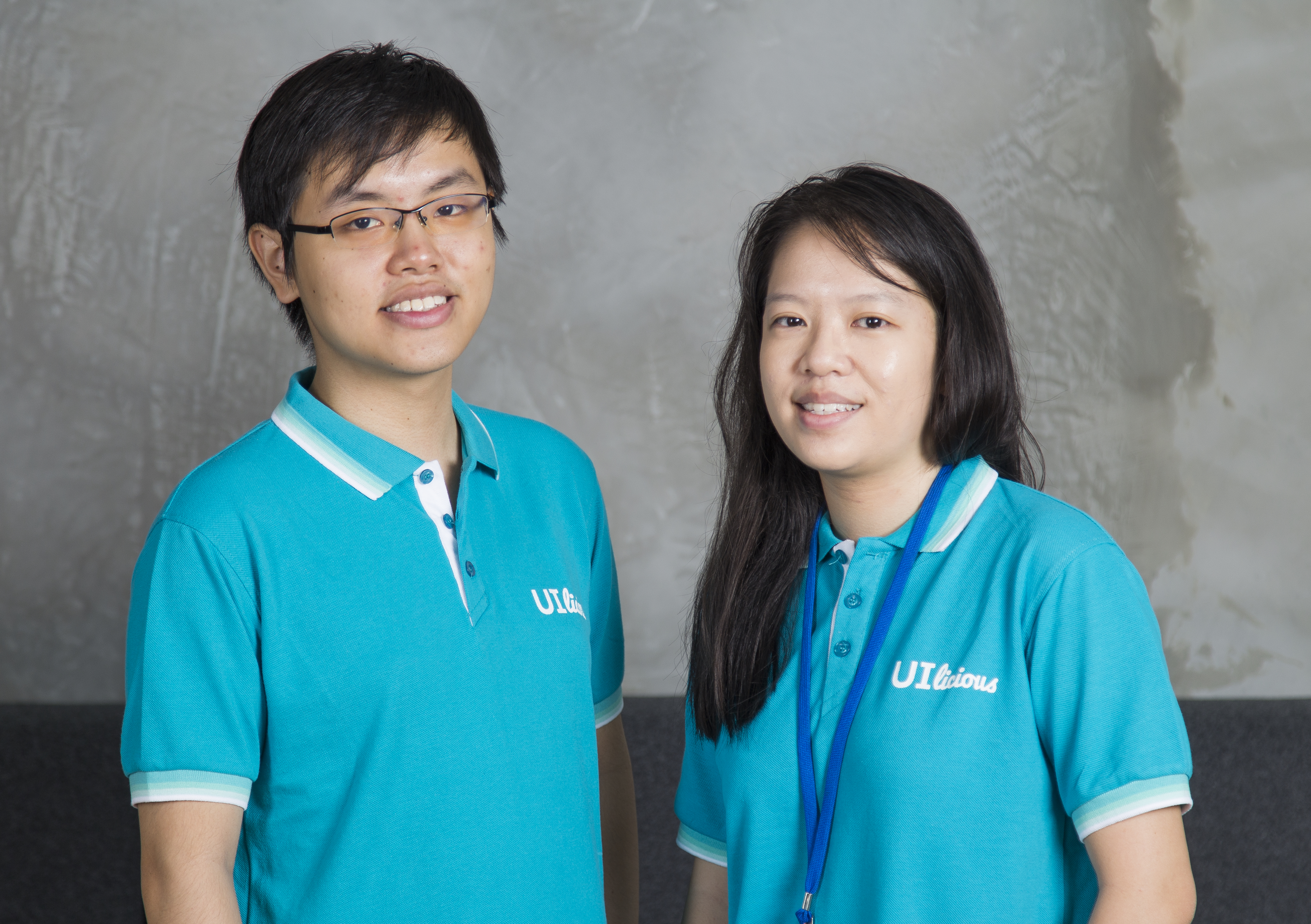
UI-licious’ co-founders, chief technology officer Eugene Cheah (left) and chief executive officer Shi Ling Tai (right)

UI-licious’ co-founders, chief technology officer Eugene Cheah (left) and chief executive officer Shi Ling Tai (right)

UI-licious, a Singapore-based startup that simplifies automated user interface testing for web applications, announced today it has raised $1.5 million in pre-Series A funding. The round was led by Monk’s Hill Ventures and will be used to grow UI-licious’ product development and marketing teams.

Founded in 2016 by Shi Ling Tai and Eugene Cheah, UI-licious serves companies of all sizes, and its current clients include Daimler, Jones Lang LaSalle and tech recruitment platform Glints.

Tai, UI-licious’ chief executive officer, said that about 90% of software teams around the world rely on manual testing, which is both time-consuming and expensive. UI-licious enables users to write test scripts in pseudocode, or a language that is similar to plain English and therefore accessible to people with little programming experience.
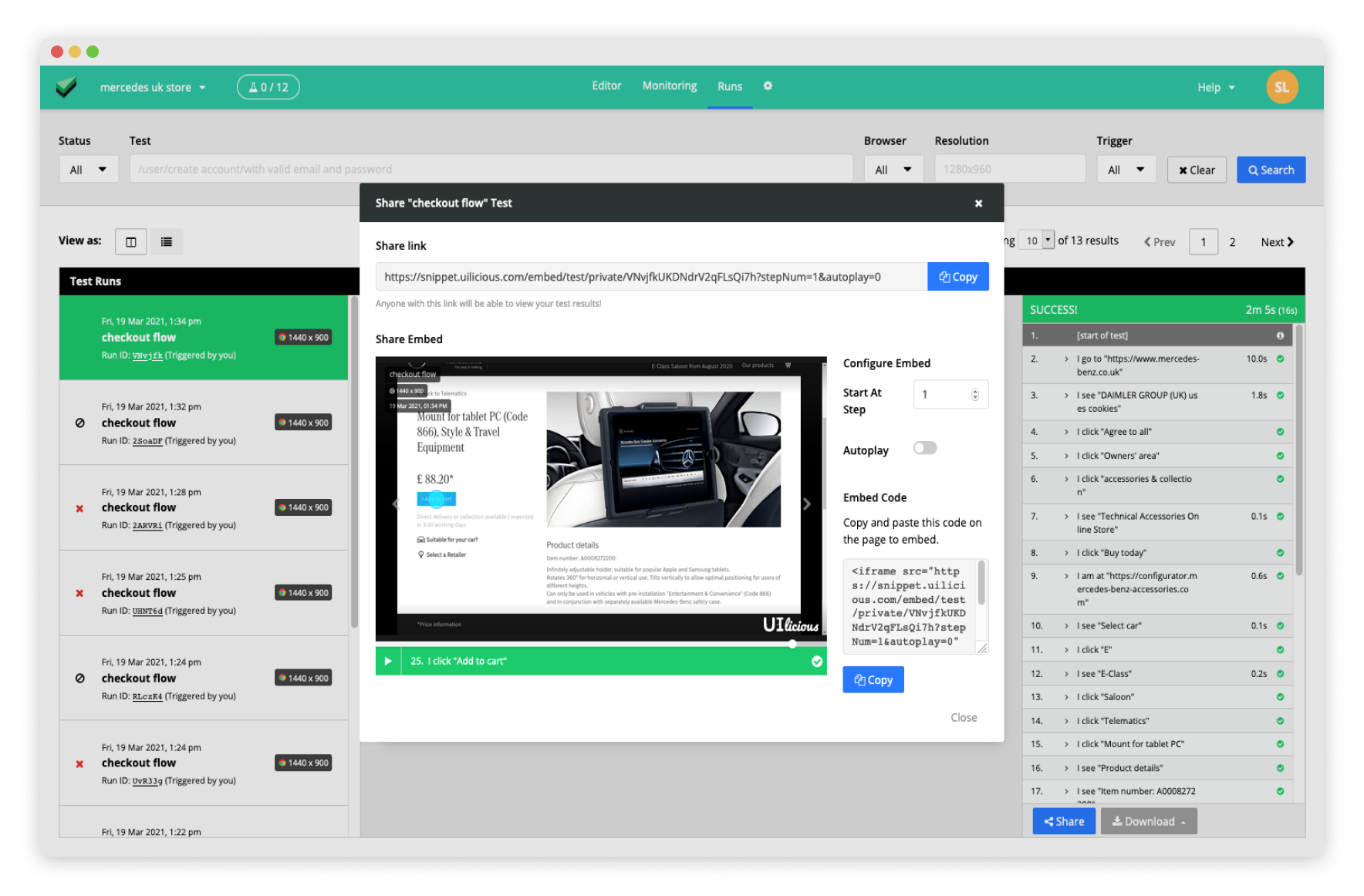
A screenshot of UI-licious' test reporting feature

A screenshot of UI-licious’ test reporting feature

Software teams can then schedule how often the tests run. UI-licious’ proprietary smart targeting test engine supports all browsers and allows the same scripts to be run even if there are changes in a web application’s user interface or underlying code. It also produces detailed error reports to reduce the time needed to find and fix a bug.

When asked how UI-licious compares to other automated user interface testing solutions, Tai told TechCrunch, “Coded solutions require a trained engineer to inspect the website’s code to write the test scripts. The problem is that most software testers are not trained programmers, sometimes they may be the marketing or sales team that owns the project. And while there are other no-code solutions that allow non-programmers to record their actions and replay it, such tests tend to become obsolete quickly as the UI changes.”

UI-licious’ selling point is that “it is designed to make it accessible for anyone to automate UI testing and set up error alerts without needing to know how to code,” she added. “UI-licious also reduces the effort to maintain the tests as the UI code changes with its smart targeting test engine.”

In press statement, Monk’s Hill Ventures partner Justin Nguyen said, “Co-founders Shi Ling and Eugene have developed a product to address the quality assurance issues that have plagued the software automation industry for decades,” adding that “the team’s experience as software engineers has equipped them with the technical knowledge and insights to build a simple and robust tool that empowers manual testers to automate testing and detect bugs before users do.”


from TechCrunch https://ift.tt/31iH3i0
via IFTTT

Comments

Popular posts from this blog

The Silent Revolution of On-Device AI: Why the Cloud Is No Longer King

Introduction For years, artificial intelligence has meant one thing: the cloud. Whether you’re asking ChatGPT a question, editing a photo with AI tools, or getting recommendations on Netflix — those decisions happen on distant servers, not your device. But that’s changing. Thanks to major advances in silicon, model compression, and memory architecture, AI is quietly migrating from giant data centres to the palm of your hand. Your phone, your laptop, your smartwatch — all are becoming AI engines in their own right. It’s a shift that redefines not just how AI works, but who controls it, how private it is, and what it can do for you. This article explores the rise of on-device AI — how it works, why it matters, and why the cloud’s days as the centre of the AI universe might be numbered. What Is On-Device AI? On-device AI refers to machine learning models that run locally on your smartphone, tablet, laptop, or edge device — without needing constant access to the cloud. In practi...

Apple’s AI Push: Everything We Know About Apple Intelligence So Far

Apple’s WWDC 2025 confirmed what many suspected: Apple is finally making a serious leap into artificial intelligence. Dubbed “Apple Intelligence,” the suite of AI-powered tools, enhancements, and integrations marks the company’s biggest software evolution in a decade. But unlike competitors racing to plug AI into everything, Apple is taking a slower, more deliberate approach — one rooted in privacy, on-device processing, and ecosystem synergy. If you’re wondering what Apple Intelligence actually is, how it works, and what it means for your iPhone, iPad, or Mac, you’re in the right place. This article breaks it all down.   What Is Apple Intelligence? Let’s get the terminology clear first. Apple Intelligence isn’t a product — it’s a platform. It’s not just a chatbot. It’s a system-wide integration of generative AI, machine learning, and personal context awareness, embedded across Apple’s OS platforms. Think of it as a foundational AI layer stitched into iOS 18, iPadOS 18, and m...

Max Q: Anomalous

Hello and welcome back to Max Q! Last week wasn’t the most successful for spaceflight missions. We’ll get into that a bit more below. In this issue: First up, a botched launch from Virgin Orbit… …followed by one from ABL Space Systems News from Rocket Lab, World View and more Virgin Orbit’s botched launch highlights shaky financial future After Virgin Orbit’s launch failure last Monday, during which the mission experienced an  “anomaly” that prevented the rocket from reaching orbit, I went back over the company’s financials — and things aren’t looking good. For Virgin Orbit, this year has likely been completely turned on its head. The company was aiming for three launches this year, but everything will remain grounded until the cause of the anomaly has been identified and resolved. It’s unclear how long that will take, but likely at least three months. Add this delay to Virgin’s dwindling cash reserves and you have a foundation that’s suddenly much shakier than before. ...