
Pretend to be productive by reading TechCrunch in your terminal window

Developers and hipsters, it’s time to join together and ditch your web browser to read this article. Kosuke Yoshimura developed a fun little project and shared it on Product Hunt today. TechCrunch-CLI is a command line interface that lets you read TechCrunch articles in text mode.

As my colleague Devin Coldewey suggested, TextCrunch would also be a good alternative name for this project.

I played around with it and I have to say that there’s something fascinating about reading the article I just published in my terminal window.
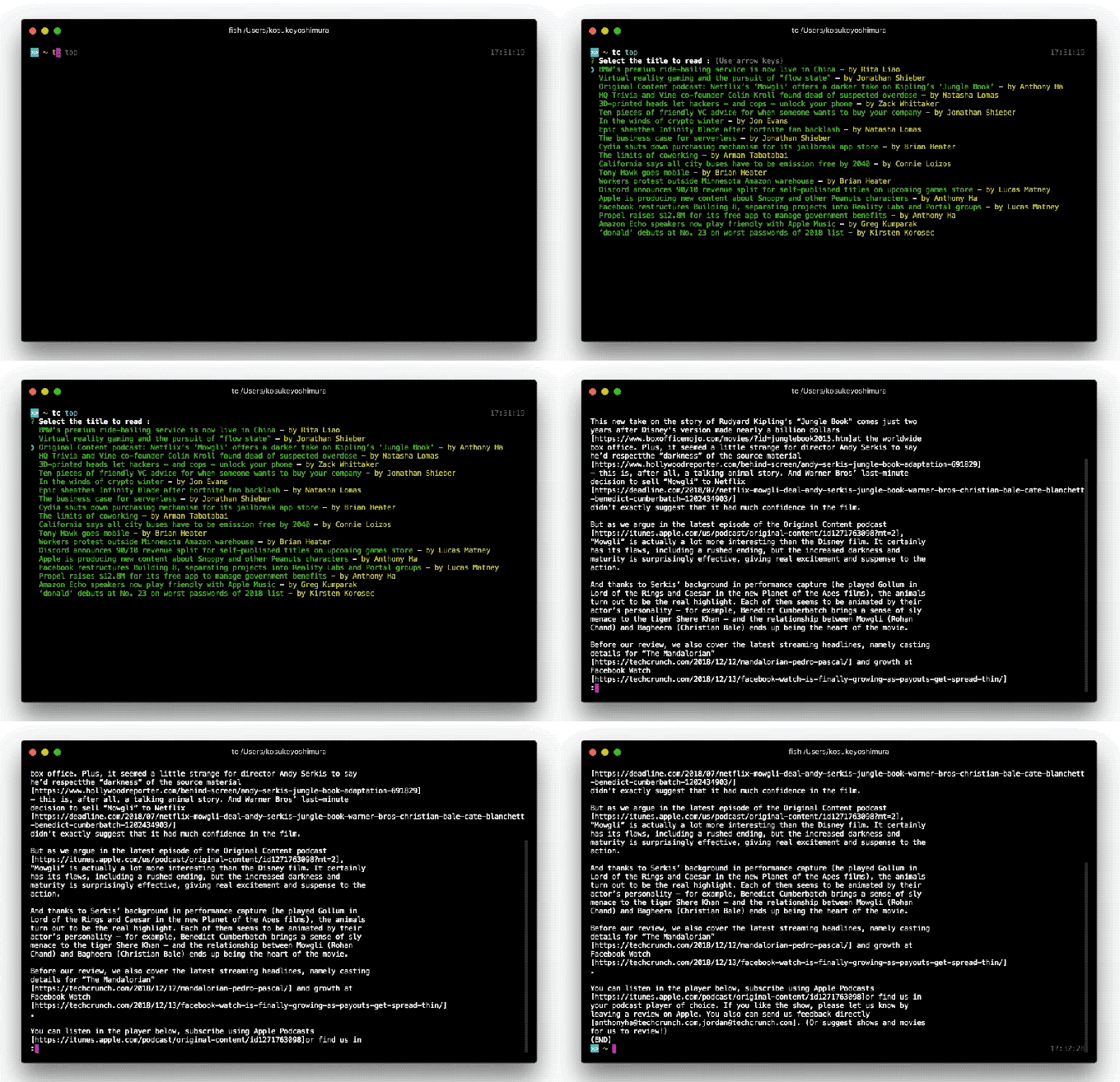
If you want to install it on your computer, it’s a simple NPM package on Github. If you have a Mac, you can install Node.js and NPM using Homebrew. Or you can spin up a Node.js image on any virtual private server platform out there if you just want to play with it for a few minutes.

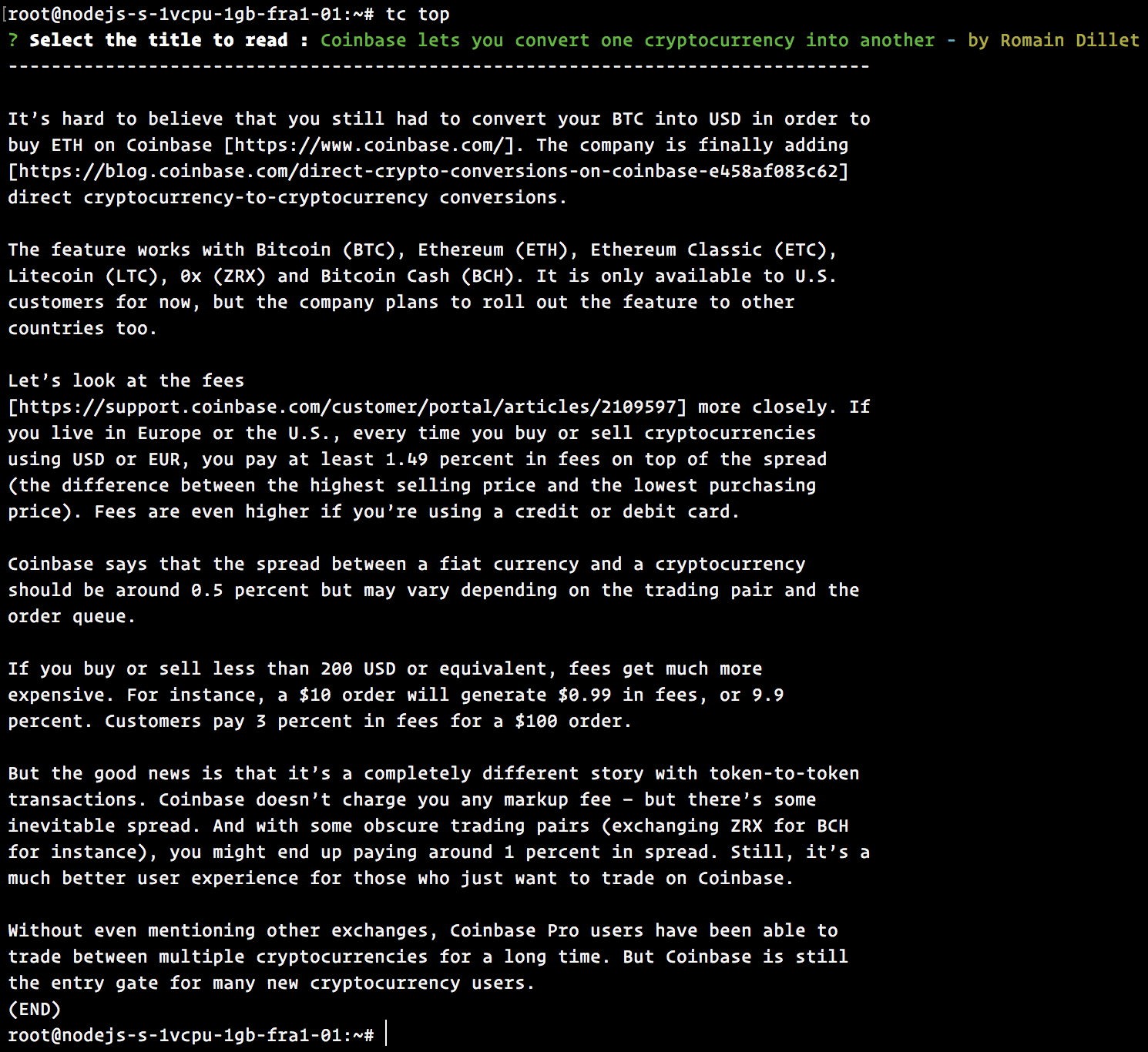
By default, the command “$ tc top” loads up the most recent articles. It’s a scrollable list so you can go back quite far in the past with the up/down arrows. When you press enter, you get a text view of the article — links are included in brackets. Sadly, illustrations aren’t magically converted into ASCII art.

You can also type a tag using “$ tc tag <searchTerms...>” to load the most recent articles on a specific topic.

I have to say that reading articles in such a minimalist way is refreshing. Arguably, TechCrunch isn’t the worst website out there. But the web has become too cluttered and you end up loading one bloated web page after another. So if you want to go back to text browsers, here’s your chance.


from TechCrunch https://ift.tt/2rL8OxY
via IFTTT

Comments

Popular posts from this blog

The Silent Revolution of On-Device AI: Why the Cloud Is No Longer King

Introduction For years, artificial intelligence has meant one thing: the cloud. Whether you’re asking ChatGPT a question, editing a photo with AI tools, or getting recommendations on Netflix — those decisions happen on distant servers, not your device. But that’s changing. Thanks to major advances in silicon, model compression, and memory architecture, AI is quietly migrating from giant data centres to the palm of your hand. Your phone, your laptop, your smartwatch — all are becoming AI engines in their own right. It’s a shift that redefines not just how AI works, but who controls it, how private it is, and what it can do for you. This article explores the rise of on-device AI — how it works, why it matters, and why the cloud’s days as the centre of the AI universe might be numbered. What Is On-Device AI? On-device AI refers to machine learning models that run locally on your smartphone, tablet, laptop, or edge device — without needing constant access to the cloud. In practi...

Apple’s AI Push: Everything We Know About Apple Intelligence So Far

Apple’s WWDC 2025 confirmed what many suspected: Apple is finally making a serious leap into artificial intelligence. Dubbed “Apple Intelligence,” the suite of AI-powered tools, enhancements, and integrations marks the company’s biggest software evolution in a decade. But unlike competitors racing to plug AI into everything, Apple is taking a slower, more deliberate approach — one rooted in privacy, on-device processing, and ecosystem synergy. If you’re wondering what Apple Intelligence actually is, how it works, and what it means for your iPhone, iPad, or Mac, you’re in the right place. This article breaks it all down.   What Is Apple Intelligence? Let’s get the terminology clear first. Apple Intelligence isn’t a product — it’s a platform. It’s not just a chatbot. It’s a system-wide integration of generative AI, machine learning, and personal context awareness, embedded across Apple’s OS platforms. Think of it as a foundational AI layer stitched into iOS 18, iPadOS 18, and m...

Max Q: Psyche(d)

In this issue: SpaceX launches NASA asteroid mission, news from Relativity Space and more. © 2023 TechCrunch. All rights reserved. For personal use only. from TechCrunch https://ift.tt/h6Kjrde via IFTTT