
Discovery may launch its own streaming service, too

Following Discovery Communications $14.6 acquisition of Scripps Networks Interactive in March, the company is now toying with the idea of launching its own direct-to-consumer service. According to remarks made by Discovery CEO David Zaslav at an industry event, AdWeek reports [paywalled], the company is considering a service with all of Discovery’s networks at a price point of $5 to $8 per month.

Whether the service would be U.S.-only has not been determined, nor did the CEO hint at any kind of timeframe for a launch.

However, Zaslav did note that he was encouraged by other newcomers in the streaming space, including the low-cost skinny bundle Philo, and AT&T’s just launched WatchTV.

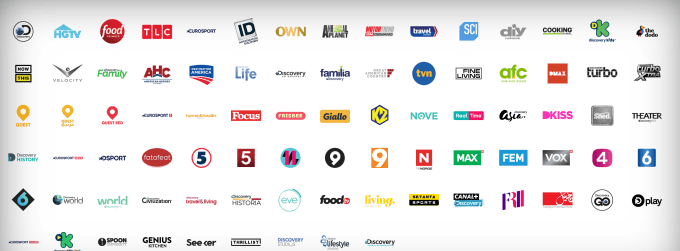
Discovery’s channels today are available on a number of the over-the-top live TV services, including WatchTV, which houses 30 of its networks.

Following its merger with Scripps, the company operates four of the top five cable networks for women 25-54, the exec also said – ID, HGTV, Food Network and TLC. And it accounts for 22 to 25 percent of the U.S. female audience on any given night, he claimed. That sizable chunk of the viewing audience, plus demand for its popular fare like “Shark Week,” could drive customers to a standalone service.
However, it’s unclear if that many consumers would pay for Discovery as a standalone offering, given how competitive the streaming landscape has become these days.

Beyond the big three – Netflix, Hulu and Amazon – consumers are being asked to consider a variety of other add-ons, ranging from premium cable networks like HBO, Showtime, Starz and Cinemax, to channels’ own apps, as with CBS All Access, to streaming sports services like fuboTV.

Then there are the over-the-top live TV offerings including Sling TV, Hulu with Live TV, YouTube TV, PlayStation Vue, AT&T’s DirecTV Now and Watch TV, and Philo.

It’s possible Discovery could have some success through Amazon’s Prime Video Channels, which allow consumers to build a true a la carte service.

Amazon’s Channels today reportedly account for 55 percent of all direct-to-consumer video subscriptions, and is growing. But critics have suggested that even with Scripps, Discovery would need to pick up another company to make its offering more appealing and competitive – especially in light of industry consolidation efforts, like Disney’s Fox acquisition, and its plans to take on Netflix in streaming in 2019, as well as AT&T’s purchase of Time Warner.

With so much choice today, and the high-quality, award-winning shows appearing on services like Netflix, Discovery’s traditional cable TV fare – like reality shows, home makeovers, animal documentaries, and cooking shows – may not have enough pull to support a standalone offering.


from TechCrunch https://ift.tt/2JZSqR5
via IFTTT

Comments

Popular posts from this blog

The Silent Revolution of On-Device AI: Why the Cloud Is No Longer King

Introduction For years, artificial intelligence has meant one thing: the cloud. Whether you’re asking ChatGPT a question, editing a photo with AI tools, or getting recommendations on Netflix — those decisions happen on distant servers, not your device. But that’s changing. Thanks to major advances in silicon, model compression, and memory architecture, AI is quietly migrating from giant data centres to the palm of your hand. Your phone, your laptop, your smartwatch — all are becoming AI engines in their own right. It’s a shift that redefines not just how AI works, but who controls it, how private it is, and what it can do for you. This article explores the rise of on-device AI — how it works, why it matters, and why the cloud’s days as the centre of the AI universe might be numbered. What Is On-Device AI? On-device AI refers to machine learning models that run locally on your smartphone, tablet, laptop, or edge device — without needing constant access to the cloud. In practi...

Apple’s AI Push: Everything We Know About Apple Intelligence So Far

Apple’s WWDC 2025 confirmed what many suspected: Apple is finally making a serious leap into artificial intelligence. Dubbed “Apple Intelligence,” the suite of AI-powered tools, enhancements, and integrations marks the company’s biggest software evolution in a decade. But unlike competitors racing to plug AI into everything, Apple is taking a slower, more deliberate approach — one rooted in privacy, on-device processing, and ecosystem synergy. If you’re wondering what Apple Intelligence actually is, how it works, and what it means for your iPhone, iPad, or Mac, you’re in the right place. This article breaks it all down.   What Is Apple Intelligence? Let’s get the terminology clear first. Apple Intelligence isn’t a product — it’s a platform. It’s not just a chatbot. It’s a system-wide integration of generative AI, machine learning, and personal context awareness, embedded across Apple’s OS platforms. Think of it as a foundational AI layer stitched into iOS 18, iPadOS 18, and m...

Max Q: Anomalous

Hello and welcome back to Max Q! Last week wasn’t the most successful for spaceflight missions. We’ll get into that a bit more below. In this issue: First up, a botched launch from Virgin Orbit… …followed by one from ABL Space Systems News from Rocket Lab, World View and more Virgin Orbit’s botched launch highlights shaky financial future After Virgin Orbit’s launch failure last Monday, during which the mission experienced an  “anomaly” that prevented the rocket from reaching orbit, I went back over the company’s financials — and things aren’t looking good. For Virgin Orbit, this year has likely been completely turned on its head. The company was aiming for three launches this year, but everything will remain grounded until the cause of the anomaly has been identified and resolved. It’s unclear how long that will take, but likely at least three months. Add this delay to Virgin’s dwindling cash reserves and you have a foundation that’s suddenly much shakier than before. ...