 |
| Image Credit: Nasa |
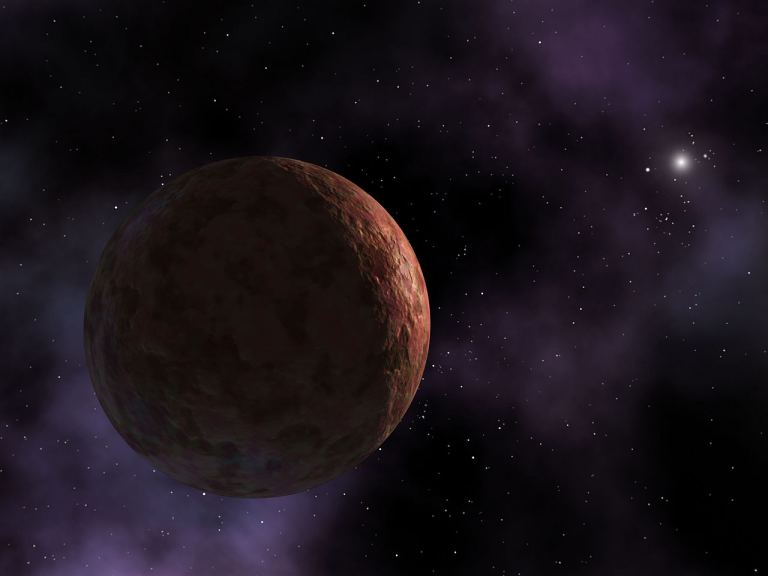
Object 90377 Sedna - a distant transneptunian object best known for its highly elliptical, 11,390-year-old orbit - is currently en-route to perihelion (its closest approach to the Sun) in 2076. After that, Sedna will return to the 'space. deep and will not return for millennia, making this overview a unique (or, once in ~ 113 lifetimes) opportunity to study an object from the far reaches of our solar system. There are no Sedna missions in the works yet, but astronomers are starting to plan for the possibility and ideal launch date for such a mission is fast approaching, with two of the best launch windows coming in 2029 and 2034.
What really sets Sedna apart from the other known dwarf planet candidates is its enormous orbit, which takes it out towards the inner edge of the Oort cloud, the most distant region of the Solar System, where long-period comets lurk. There are several competing theories to explain how Sedna ended up in this position. Perhaps the most high-profile theory is the possibility that a yet unknown ninth planet, perhaps ten times the size of Earth, disrupted Sedna’s orbit and swept it and several other objects out into highly elongated orbits. Visiting Sedna probably won’t solve this particular mystery, but it will tell us a lot about the composition of these extreme trans-Neptunian objects.
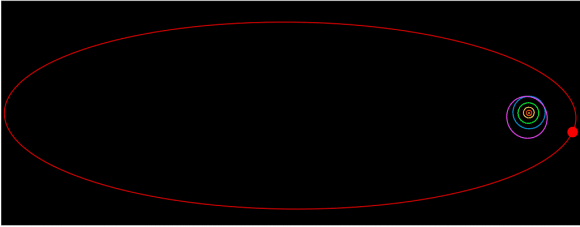 |
| The orbit of dwarf planet candidate 90377 Sedna (red) compared to Jupiter (orange), Saturn (yellow), Uranus (green), Neptune (blue), and Pluto (purple). Credit: Szczureq/kheider/NASA (Wikimedia Commons). |
In planning a mission to Sedna, the Voyager spacecraft are not bad places to look for inspiration. They famously took advantage of a lucky alignment of planets to take a grand tour of the outer Solar System, stealing energy from Jupiter to pick up speed and reach their more distant targets. Similar gravity assists will be required to make the trip to Sedna manageable. A team of scientists led by Vladislav Zubko from the Space Research Institute of the Russian Academy of Sciences recently modeled a series of possible trajectories to Sedna, favoring a 2029 launch date as the most feasible option.
The 2029 trajectory, they determined, would take the spacecraft to Venus first, then back to Earth (twice), before passing Jupiter on the way to Sedna, with flight times as short as 20 years but more optimally in the 30-year range. The longer flight time would increase the altitude of the spacecraft over Jupiter during the gravity assist, reducing the time spent exposed to the gas giant’s harmful radiation.
A 30-year flight plan would also mean passing by Sedna more slowly, providing more time to gather data on the object. Choosing this option would give the spacecraft a relative velocity of 13.70km/s as it passed Sedna, comparable to the speed at which New Horizons approached Pluto in 2015.
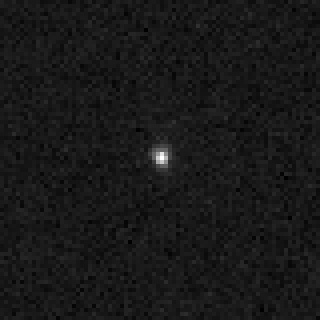 |
| 90377 Sedna as seen by the Hubble Space Telescope in 2004. Credit: NASA. |
As a bonus, this trajectory would also take the spacecraft past a 145km diameter asteroid named Massalia, providing the team with an additional scientific target to study, as well as a chance to test the spacecraft’s systems.
A second trajectory proposed by the team would consist of a 2034 launch, and would provide a similar additional flyby, this time of the metallic asteroid 16 Psyche.
At the moment, it’s unclear whether a mission to Sedna will actually make it to the launch pad with all the competing options available to mission planners in the coming decade, but as it’s our only chance in the next 11,000 years, the idea is sure to be given due diligence.
Note:This article is taken from Universe Today to see original article Click here
Source: Universe Today
from TechCrunch https://ift.tt/3qQLSM7
via IFTTT
Comments
Post a Comment