Founders like to create companies around what they know, and Frank Westermann and Anton Kittelberger know diabetes.
They met and bonded over both having type 1 diabetes — Westermann was diagnosed over 25 years ago — and started the MySugr app for diabetes self-management in 2012 (they won a TC pitch-off back in 2011). Four years later, Westermann moved to the U.S. from Austria to introduce MySugr stateside before the company was acquired by Roche for $100 million in 2017.
The pair moved on to their next journey, also in diabetes, starting 9am.health in April, a virtual diabetes clinic designed to provide people living with prediabetes and type 2 diabetes access to personalized care and affordable medications from their homes. 9am.health’s clinic was launched in August.
Today, the San Diego-based company announced a $3.7 million seed round from Founders Fund, Define Ventures, Speedinvest and iSeed Ventures to target the 1 in 3 people living with diabetes in the United States, Westermann told TechCrunch.
“We understand the day-to-day challenges that people with prediabetes and type 2 diabetes have,” he added. “Access to care is the real issue, and rather than have patients wait weeks to get an appointment, we send a kit with tests to your home, and you send it back to us.”
9am.health kicked off in Texas and California, and is now available in 33 states. It is finding patients through digital outreach, community work and hospitals.
Even with insurance, the average person living with diabetes spends about $16,750 per year on medical expenses and has approximately 2.3 times higher the costs than if they didn’t have the disease. Instead, patients can subscribe to 9am.health for $40 per month; that includes online prescription shipping, unlimited personal medical care, medications to manage diabetes, hypertension or hyperlipidemia and at-home lab tests.
Westermann sees other companies working in the diabetes space, but says 9am.health is unique in providing “a digital front door for entire diabetes care,” while others focus on specific pain points. By taking that whole approach, he sees opportunity in going beyond diabetes to the general chronic disease realm as many living with diabetes — 98% of Americans in fact — also have other comorbidities like high blood pressure, high cholesterol and mental health issues, he added.
The new funding will enable the company to grow its team and carve out some of the digital diabetes market share that was valued at $13 billion in 2020 and is forecasted to grow annually by 18.8% through 2027. 9am.health will also invest in advancing its virtual screening ability and expand the types of medication it can offer.
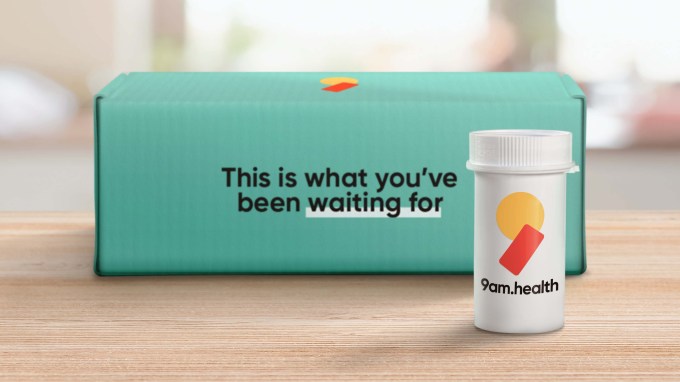
9am.health diabetes kit
“We want to tear down the barriers and make care as easy as possible and managing diabetes part of life,” Westermann said. “When you live with chronic illness, it is an everyday thing, and sometimes you feel good, and others days you don’t. That’s why we named the company 9am.health because you can wake up at 9 a.m. and start your diabetes journey all over again.”
Lynne Chou O’Keefe, founder and managing partner at Define Ventures, says the future of healthcare is going to be more consumer-focused and will be wrapped around the patient’s care journey. She considers 9am.health to be leading this type of care with a platform that bundles education, community, coaching and care that is direct-to-consumer.
Chou O’Keefe has been investing in healthcare her entire VC career, and sat on the board of Livongo for four years. Through that experience she learned how patients struggle with their care decisions, and finds 9am.health’s founders to have a similar deep expertise and understanding in diabetes, especially with the success they had with MySugr.
“The last place you should receive healthcare is in the doctor’s office, while the first place should be wherever you are,” she added. “This is a very different way than what the healthcare system is today. We feel that people want to manage their diabetes, but then go on and live their lives.”
from TechCrunch https://ift.tt/3zqk9UP
via IFTTT
Comments
Post a Comment