As college students at Berkeley, Spencer Kimball and Peter Mattis created a successful open-source graphics program, GIMP, which got the attention of Google. The duo ultimately joined Google, and even personally got kudos from Sergey Brin and Larry Page. Kimball and Mattis quickly rose to prominence within the company, and then chose to leave it all behind to start what would eventually become CockroachDB. Years later, Cockroach Labs has over 250 employees and has received investments from the likes of Benchmark, GV, Index Ventures and Redpoint totaling more than $350 million, according to Crunchbase. The company is now on route to what some think is an “inevitable IPO.”
The story of CockroachDB, from its origin to its future, was told in a four-part series in our latest EC-1:
- Origin story “CockroachDB, the database that just won’t die” (2,100 words/8 minutes)
- Technical design “How engineers fought the CAP theorem in the global war on latency” (2,400 words/10 minutes)
- Developer relations and business “‘Developers, as you know, do not like to pay for things‘” (2,200 words/9 minutes)
- Competitive landscape and future “Scaling CockroachDB in the red ocean of relational databases” (2,400 words/10 minutes)
I’m biased, but it’s a must-read that gets into tensions that any startup founder can relate to: from navigating heavyweight competitors, to growing past free tiers, to maintaining your users’ attention. It’s the eighth EC-1 we’ve published to date, which my colleague and TC Managing Editor Danny Crichton estimates puts us at 90,000 words all about startup beginnings, product development, marketing and more.
In the rest of this newsletter, we’ll get into that WeWork book, bite-sized entrepreneurship and some SPACs. Follow me on Twitter @nmasc_. Or don’t, it’s your choice!
The Cult of We
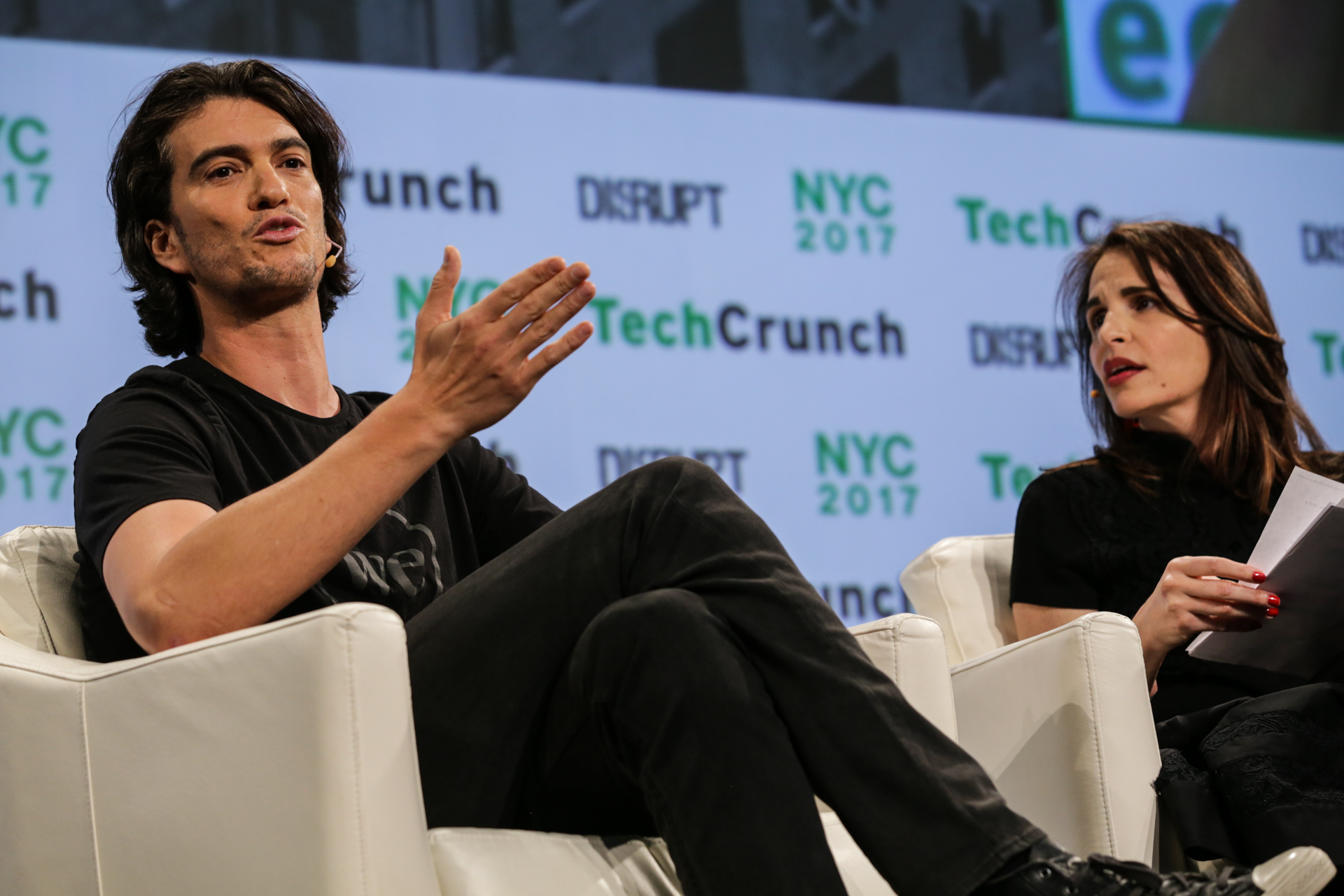
Adam Neumann (WeWork) at TechCrunch Disrupt NY 2017. Image Credits: TechCrunch
This week on Equity, Alex and I interviewed Eliot Brown, who wrote “The Cult of We” along with Maureen Farrell. Our conversation riffed on some of the book’s eyebrow-raising details and anecdotes, but mainly focused on what WeWork’s rise and fall did to the state of startups and tech journalism more broadly.
Here’s what to know: Not much has changed. Jokes aside, Brown shared his notes on how the current boom in startup financings has a worrisome air of frenzy and fluff. He also chatted about how sometimes the most illuminating question can be a simple one: What makes you a tech company?
More money, more problems?
- A $170M Series A
- Hong Kong-based FTX raises largest-ever VC round for a crypto company
- These simple metrics will tell you if your startup is ready to scale
TikTok what again?
Image Credits: TechCrunch
TikTok kept popping up throughout the week. Index Ventures, for example, noted how the firm’s TikTok account has amassed an impressive following and is a channel to talk to the younger generations. Nothing like some short-form videos to stay hip and relatable while raising $3 billion in one go.
Here’s what to know: While TikTok has certainly changed the world, I worry when I see the allure of bite-sized content get edtech’d. Bite-sized content can be a nifty way to spread content, but it isn’t one-size-fits-all. Duolingo, which priced its IPO this week, still struggles to show meaningful learning outcomes and optimizes more for motivation than comprehension. This tension is a key note for companies like Numerade and Sololearn, which both raised this week, to not overly TikTok learning materials.
Other edtech content for your eyes:
- China’s expected edtech clampdown may chill a key startup sector
- NewCampus wants to train the first-time managers within Southeast Asia’s tech giants
- India’s most valuable startup buys US-based digital reading platform Epic for $500M
So, SPACs

Image Credits: Bryce Durbin / TechCrunch
It’s been awhile since I’ve used that acronym in Startups Weekly. That said, special purpose acquisition vehicles are still very much a thing and are still very much worth paying attention to.
Here’s what to know: Lucid Motors’ SPAC merger was just approved. Reporter Aria Alamalhodaei writes that the move came after executives extended the deadline to vote to merge by one day after not enough investors showed up. “The issue is unusual but could become more common as more companies eschew the traditional IPO path to public markets and instead merge with SPACs,” she writes.
Also special:
- Matterport went public through a SPAC
- After going public via a SPAC, Taboola acquires e-commerce marketing network Connexity for $800M
Around TC

Image Credits: Hurca! (opens in a new window) / Flickr (opens in a new window) under a CC BY-ND 2.0 (opens in a new window) license.
If you haven’t already, please fill out TC’s ongoing growth marketing survey. We’re using these recommendations of top-tier growth marketers around the world to shape our editorial coverage and to build out TechCrunch Experts.
- Growth marketing roundup: TechCrunch Experts, creative testing and how to nail your narrative
- Marketing Cube founder Maya Moufarek’s lessons for customer-focused startups
Across the week
Seen on TechCrunch
- All Raise launches virtual bootcamp for women and nonbinary founders
- Jack Dorsey says bitcoin will be a big part of Twitter’s future
- Clubhouse is now out of beta and open to everyone
- How we built an AI unicorn in 6 years
- Michael Arrington’s next act
Seen on Extra Crunch
- Last-mile delivery in Latin America is ready to take off
- Susan Su on how to approach growth as your startup raises each round
- The European VC market is so hot it may skip its summer holiday
- Cowboy Ventures’ Ted Wang: CEO coaching is ‘about having a second set of eyes’
- Silicon Valley comms expert Caryn Marooney shares how to nail the narrative
Same time, same place next week? Bring a friend!
from TechCrunch https://ift.tt/36W7blI
via IFTTT
Comments
Post a Comment