After taking on TikTok with music-powered features last month, Snapchat this morning is officially launching a dedicated place within its app where users can watch short, entertaining videos in a vertically scrollable, TikTok-like feed. This new feature, called Spotlight, will showcase the community’s creative efforts, including the videos now backed by music, as well as other Snaps users may find interesting.
Snapchat says its algorithms will work to surface the most engaging Snaps to display to each user on a personalized basis.
To do so, it will rank the Snaps in the new feed using a combination of factors, like how many other people found a particular Snap interesting, how long people spent watching it, if it was favorited or shared with friends, and more. The algorithms will also consider negative factors, like if a viewer skipped watching the Snap quickly, for example. Over time, the feed will become tailored to the individual user based on their own interactions, preferences, and favorites. This is a similar system to what TikTok uses for its “For You” feed.

Image Credits: Snap
However, on TikTok, only users with public profiles can have their videos hit the “For You” feed. Spotlight, meanwhile, can feature Snaps from users with both private or public accounts. These Snaps can be sent to Spotlight directly or posted to Our Story. The company says the Snaps from the private accounts will be featured in an unattributed fashion — that is, no name will be attached to the content. There will also be no way to comment on these Snaps or message the creator, Snapchat explains.
Users who are over 18 can opt in to public profiles in order to have their names displayed, which allows them to build a following. But while this allows users to private and directly reply to the creators, there are no public comment mechanisms on Spotlight.
That’s a different setup than on TikTok and gives Snapchat a way to avoid the much larger hassle of handling comment moderation.
The Spotlight feed itself, though, is moderated. The company says all Snaps that appear on the new feed will have to adhere to Snapchat’s Community Guidelines, which prohibit the spread of false information (including conspiracy theories), misleading content, hate speech, explicit or profane content, bullying, harassment, violence, and other toxic content. The Snaps must also adhere to Snapchat’s new Spotlight Guidelines, Terms of Service, and Spotlight Terms.
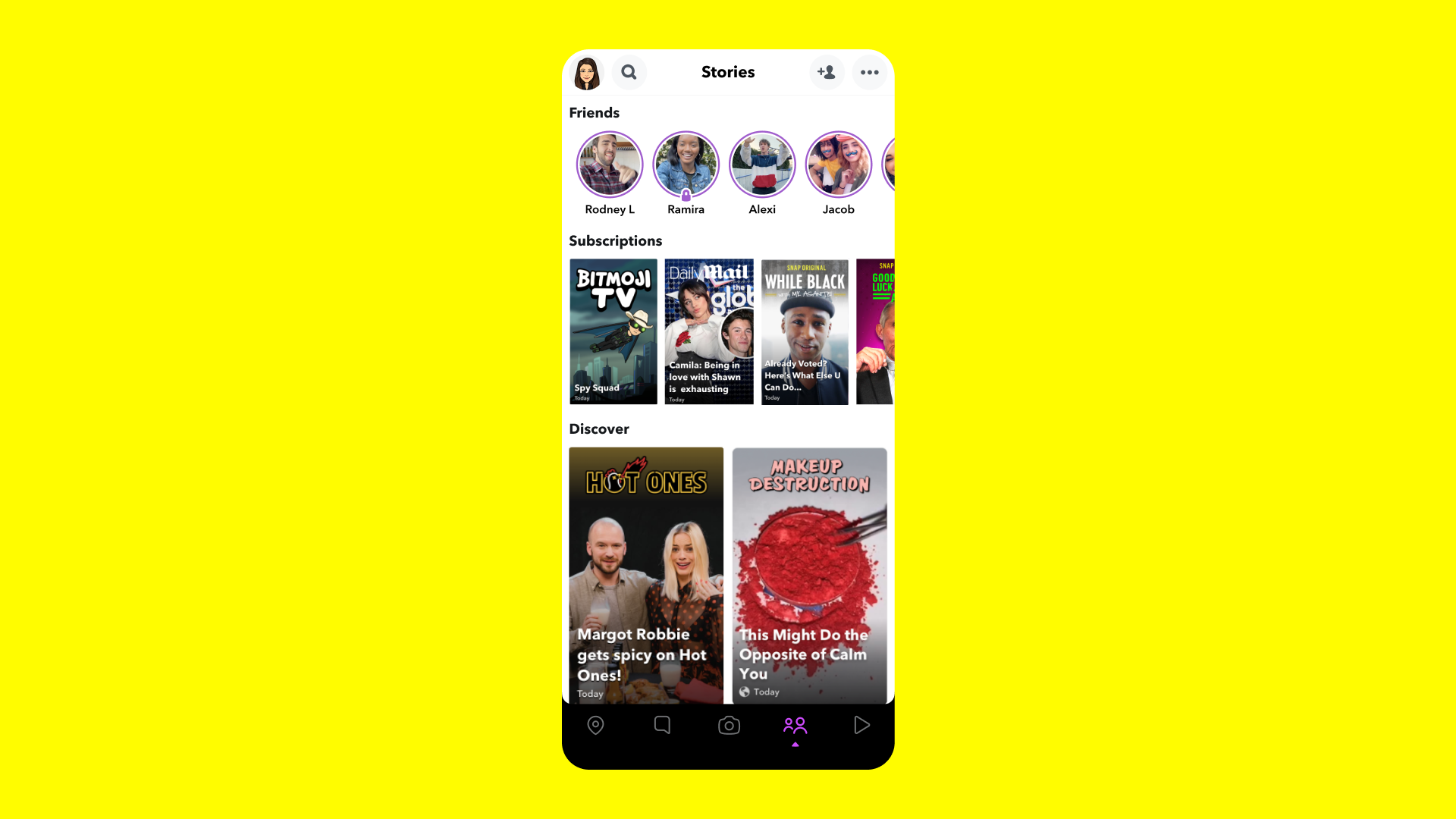
Image Credits: Snap
The Spotlight Guidelines specify what sort of content Snapchat wants, the format for the Snaps, and other rules. For example, they state the Snaps should be vertical videos with sound up to 60 seconds in length. They should also include a #topic hashtag and should make use of Snapchat’s Creative Tools like Captions, Sounds, Lenses or GIFs, if possible, The Snaps have to be appropriate for a 13+ audience, as well.
Captions are a new feature, designed for use in Spotlight. Also new is a continuous shooting mode for longer Snaps and the ability to trim singular Snaps.
The Snaps can also only use the licensed music from Snapchat’s own Sounds library and must feature original content, not content repurposed from somewhere else on the internet . That could limit accounts that repost internet memes, which tend draw large subscriber bases on rival platforms, like Instagram and TikTok.
In addition, Snaps in Spotlight won’t disappear from being surfaced in the feed unless the creator chooses to delete them.
Users will be alerted to the new Spotlight feature when they return to Snapchat following Monday’s launch. Afterward, they’ll be able to take Snaps as usual then choose whether they want to send them to their friends, to their Story, to Snap Map, or now to Spotlight.

Image Credits: Snap
The feed itself will be accessible through a prominent new fifth tab on the Snapchat home screen’s main navigation, and is designated with a Play icon.
To encourage users to publish to Spotlight, the company will distribute over $1 million USD every day to Snapchat users (16 and up) who create the top Snaps on Spotlight. This will continue through the end of 2020. The earnings will be determined by Snapchat’s proprietary algorithm that rewards users based on the total number of unique views a Snap gets per day (calculated using Pacific Time), as compared with others on the platform.
The company says it expects many users to earn money from this fund each day, but those with the most views will earn more than others. It will also monitor this feed for fraud, it warns.
With the music licensing aspects already ironed out, Snapchat is now looking to leverage the over 4 billion Snaps created by its users every day to power the new Spotlight feed. This move represents Snapchat’s biggest attempt at taking on TikTok to date — and one that it’s willing to kickstart with direct payments, too. That will likely encourage plenty of participation among Snapchat’s young user base, given they’re already using the app on a regular basis. And once posting to Spotlight becomes a habit, Snapchat could have a viable competitor on its hands, at least among the younger demographic that favors its app.
Its biggest disadvantage, of course, is that it has struggled to reach beyond its young user base. That’s something TikTok has done better with, by comparison. The Wall St. Journal last week noted that TikTok teens were often following accounts from senior citizens, for instance, and the AARP had earlier reported TikTok had attracted a middle-aged crowd, as well.
Snapchat says Spotlight is live today on both iOS and Android in the U.S., Canada, Australia, New Zealand, the U.K., Ireland, Norway, Sweden, Denmark, Germany, and France, with more countries to come soon.
from TechCrunch https://ift.tt/39fM5Rw
via IFTTT
Comments
Post a Comment